
“There is a well-known saying that if geometrical axioms affected human interests, attempts would certainly be made to refute them. Theories of natural history which conflicted with the old prejudices of theology provoked, and still provoke, the most rabid opposition. No wonder, therefore, that the Marxian doctrine, which directly serves to enlighten and organize the advanced class in modern society, indicates the tasks facing this class and demonstrates the inevitable replacement (by virtue of economic development) of the present system by a new order—no wonder that this doctrine has had to fight for every step forward in the course of its life.” Marxism and Revisionism, Lenin.
During the course of the Chinese Revolution, Chairman Mao and the Communist Party of China elaborated a set of important principles for revolutionaries they called the “Three Do’s and Three Don’ts.” These were, respectively, the principles of 1) “Practice Marxism and Not Revisionism”, 2) “Unite and Don’t Split”, and 3) “Be Open and Aboveboard, Don’t Intrigue and Conspire.” These three principles have become very popular and are widely used in the international revolutionary movement to this day, and for good reason. In the next two entries in the Our Principles series we are going to explore these principles, why they are so important, and some basic examples of them and they can be implemented now.
The first and most fundamental of these is “Practice Marxism and Not Revisionism.” Marxism is our fundamental guide, because it is a class stand, a worldview, and a method, that comes from more than 150 years of the struggle of the international working class. Practicing Marxism means distinguishing both ideologically and in practice between what serves the working class and what serves the capitalist class. In striving to apply Marxism, revolutionaries-in-formation must objectively analyze the conditions they encounter drawing from the wealth of knowledge of Marxism and past experiences, use that analysis to come up with correct political lines, and finally, test it out again through class struggle, production, and scientific experiment, to correct, further develop, and enrich our understanding and application of Marxism.
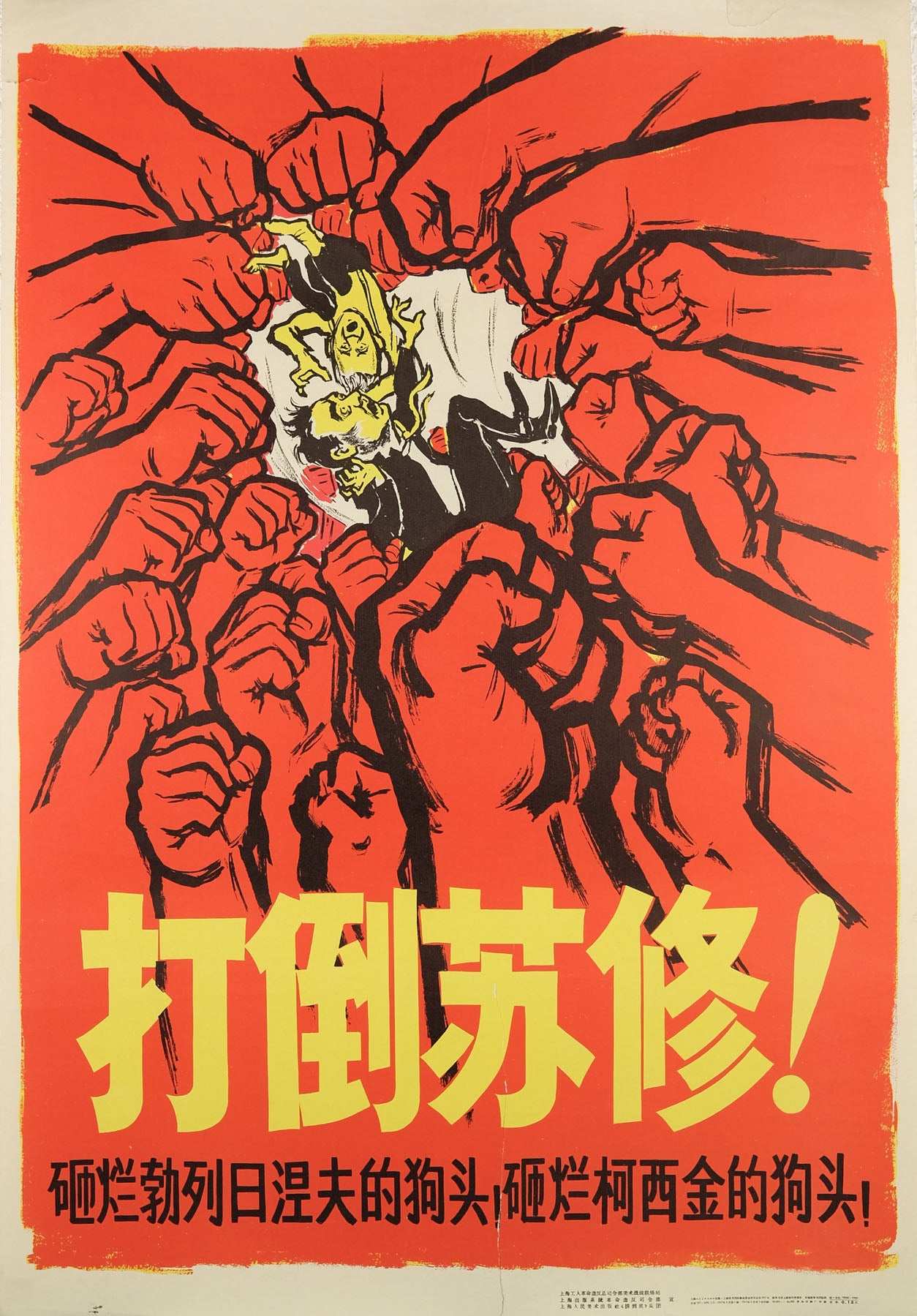
Revisionism, on the other hand, comes in many disguises. It may present itself as a more “rational,” “pragmatic” and “objective” understanding in contrast to a supposedly “ultra-leftist” Marxism, or it may alternatively present itself as a purely “left” line than the supposedly “rightist” Marxism. In either case, revisionism always rejects the workers and their fundamental interests: overthrowing the capitalist system and replacing it with a socialist one. Revisionism rejects dialectical materialism and instead uses idealism and metaphysics in its analysis, in order to serve the imperialist class enemy and lead the people astray. This is why the revolutionary masses understand that while international imperialism and reaction are the main targets of our revolution, revisionism is our revolution’s greatest danger. That is because revisionism can achieve what imperialist oppression cannot: rotting the revolutionary movement from the inside out until it falls apart.
A common form of revisionism is the explicit rejection of the principle that the masses make history. To these revisionists, history is made by a few enlightened people only, who gain their abstract knowledge from studies and not from living with, working with and struggling with the masses. In practice, this often means a refusal to concretely organize the masses around their demands and struggles. Instead, revisionism contents itself with ideological debate divorced from practice, and does nothing to break with the rule of the bourgeoisie.
Another common form of revisionism in the United States is the “accumulation of forces” theory. This theory holds that we can mainly use legal methods and the systems of capitalist legality to ‘accumulate masses’ until we are strong enough to begin struggling and actually start making revolution. Whether through the use of elections, courts, state unions, NGOs, or online spaces, this is the default theory of revolution of most organizations on the “US left,” which is why we are stuck with dozens of organizations endlessly “accumulating” their “forces” indefinitely while very little revolutionary or even class-conscious struggle is going on. That is because a revolutionary organization will never mobilize, politicize and organize the masses in large numbers by acting like any other capitalist or reformist organization. If workers wanted to participate in that they could just go volunteer at a Catholic charity or at their local newspaper. The workers want a real class revolution, and revisionism tries to rob them of that with the “accumulation of forces” theory.
As mass activists, while we strive for a new socialist society, we come from the ranks of the old capitalist society and some of us even come from the ranks of the petty-bourgeoisie and the capitalist class. Because of this, we inevitably are imprinted with ideas from the old society such as individualism and subjectivism. At every critical juncture of struggle, there will always be some who are scared by the enemy and call for deserting the struggle; worse, there could always be comrades who are corrupted and bought off by the enemy. All of this calls for us to constantly remold ourselves in a proletarian way, and always wage two-line struggle within our organizations and mass movement to ensure the correct principles, line, and practice win out. The existence of two lines, two positions within a given organization is a fact, and it is up to us to recognize it, and consciously fight against anything that harms the interests of the working class. It is a major task of revolutionaries-in-formation in the US to resolutely struggle against revisionism in all forms, and to impose Marxism in practice. In all sites of struggle, revolutionaries should consider what aligns with the proletariat and what aligns with the bourgeoisie. If there are those who, in theory and practice, align with the bourgeoisie, we must resolutely wage struggle against their positions, and be ready to rectify and remold them and ourselves whenever such errors are committed. Practicing Marxism often means going against the tide of what is already “popular” or “common sense,” especially among the activist circles in the US.
In our next entry in this series, we will continue discussing the Three Do’s and Three Don’ts, focusing on the following two: Unite and Don’t Split, and Be Open and Aboveboard, Don’t Intrigue and Conspire.
For further reading on this topic, we suggest:
- A Basic Understanding of the Communist Party of China – Chapter 5
- Marxism and Revisionism, Lenin
- Marxism and Reformism, Lenin
- On the Correct Handling of Contradictions among the People – Section VIII, Mao