PDC Builds Neighborhood Defense Against ICE
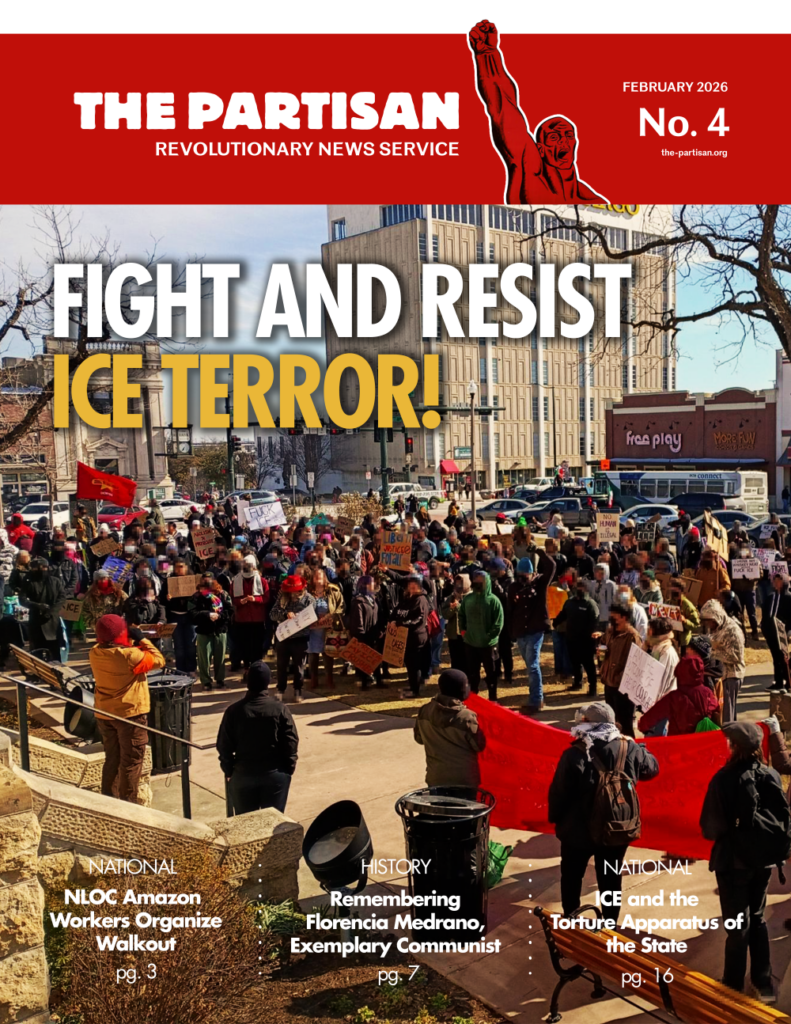
Over the course of November, chapters of the People’s Defense Committee (PDC) continued to work to build active resistance to ICE, CBP, and police brutality. Beginning earlier this year with deployments of National Guard, Marines, and other federal forces alongside ICE and CBP to cities like Los Angeles and Washington, D.C., it is clear that US society is becoming more and more militarized. With a pressing need to broaden and elevate the spontaneous mass struggles against State terror, organizations like the PDC have called for the formation of what they call neighborhood defense units as localized, organized, and militant organs of long-term workers’ neighborhood defense and resistance.
In Charlotte, starting with the November 15 “Charlotte’s Web” operation by CBP, a campaign of terror was unleashed on the masses. Over 370 people were violently arrested. Responding quickly, People’s Defense Charlotte organized a demonstration in East Charlotte against the CBP operation, joined by community members and other class-conscious and progressive organizations. The State tried to paint the activists as “outside agitators,” which is an often-used demobilization tactic to attempt to prevent the masses from mobilizing. In spite of this, attendees showed up en masse to agitate against State terror. Highlighting the need for coordinated and systematic responses to state terror, speakers called for organizing neighborhood defense units as a solution, and community members discussed their experiences at the hands of ICE and CBP.


In Washington, D.C., after the August declaration of a “crime emergency” by the US State, and the imposition of National Guard alongside a now-federalized Metropolitan Police Department, People’s Defense D.C. began mobilizing among the community as part of the spontaneous mass resistance through various rapid-response networks. This culminated in November, where PDDC activists organized a rally in the Columbia Heights neighborhood to condemn the continued presence of ICE and other state forces in the city, as well as call for the formation of a neighborhood defense unit in the community.


In Chicago, after months of ICE’s brutal “Operation Midway Blitz” that began in September, People’s Defense Chicago, alongside fellow community members from the Garfield Park neighborhood, formed a neighborhood defense unit. Attendees discussed issues such as police chases, police violence on homeless people, the use of tear gas by ICE, the use of surveillance tools, and abductions by ICE at local schools. Support for existing rapid-response networks was discussed, as well as ways to improve and expand this work in the long-term. Many community leaders offered their support, expressing deep joy to see that this work is being done, with many saying “this is what needs to happen.”


Students Fight Back Against State Repression
During November, students of the Revolutionary Student Union (RSU) continued their campaign in solidarity with nationally oppressed political prisoners. Students from New Jersey organized a letter-writing event for Tarek Bazrouk, a Palestinian student and activist who was taken by the State in June and has been held in custody without bail since. Students from Denton, TX, Columbus, OH, Washtenaw, MI, Edmond, OK, and New York City all organized movie screenings of the movie Across Enemy Lines, which details the life of New Afrikan political prisoner Shaka Shakur. In these events, activists discussed the struggle for Black/New Afrikan liberation and how to support the struggles of political prisoners and demand their release. Despite the repression faced by Denton Student Union from the Texas Attorney-General, they have maintained their commitment to organizing and working with other class-conscious organizations in the struggle.


On November 15, students from RSU at Johnson & Wales University rallied to demand that the university lower student tuition, provide job security for staff, provide financial accountability, and end the neglect of school facilities. In response, campus security alongside Providence police harassed the students and ordered them to disperse. Even after the rally relocated to an off-campus park across the street, campus security continued to surveil students, taking pictures of those in attendance from unmarked vehicles. Despite facing repression, members of the JWU Student Movement stated “We will not be bullied into silence. We will continue to struggle for better living conditions, lower tuition, and job stability for JWU faculty.”

NLOC Agitates Around Strike Platform, Releases Labor Storm Edition 2
Members of the Organization of Class Conscious Workers participated in and agitated on Starbucks picket lines around their strike platform. The platform was created through combining the New Labor Organizing Committee (NLOC) program with the demands and input of OCSW members and supporters at Starbucks itself, and it centers around political positions like opposing no-strike clauses and fighting for actually meaningful economic concessions from the owners.
In addition to this and other work, in the month of November NLOC released the second edition of its bimonthly newsletter, Labor Storm, which contains sections on the work of the shop organizations as well as of the New Labor Committees which were launched this spring and summer. To read it, click here or visit the New Labor Press website.