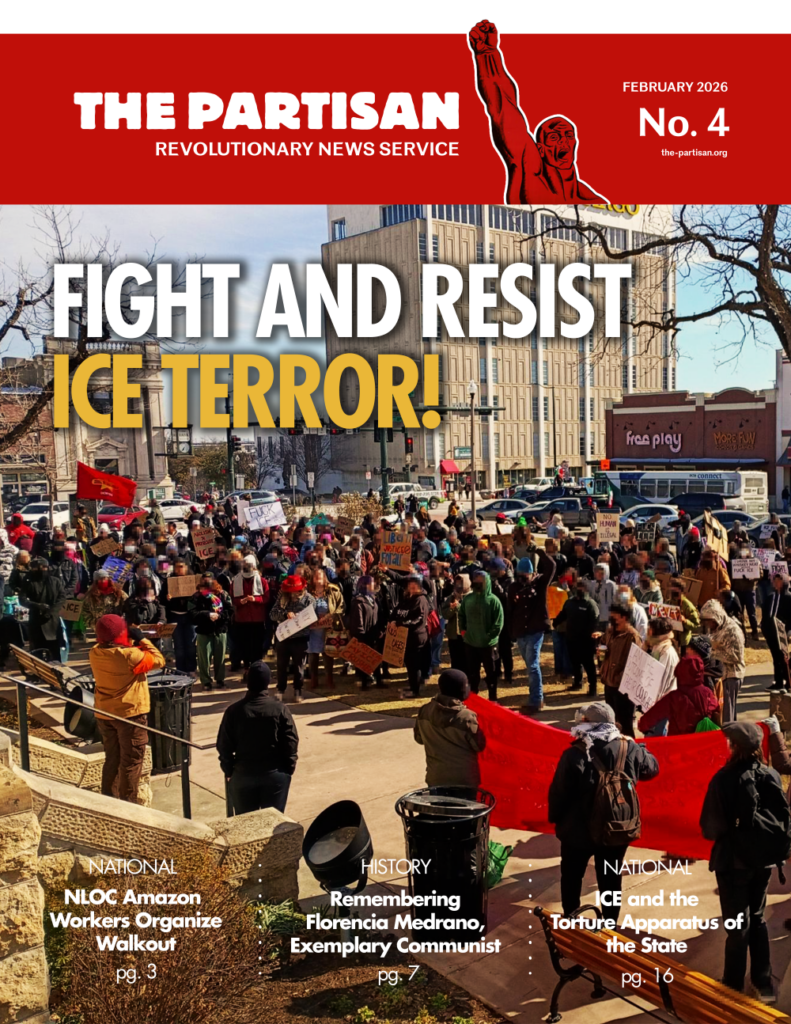
The Partisan is happy to republish the following article analyzing the 1970 postal strike in the US from the New Labor Organizing Committee-affiliated shop organization New Day at USPS. To reach out to them, email NewDayatUSPS@proton.me.
March marks the 56th anniversary of the 1970 Postal Workers Wildcat Strike. The strike—illegal then as it is today—was a response to stagnating wages, a lack of full collective bargaining rights, authoritarian management, unsafe working conditions, and sellout union leadership. It was a demonstration of rank-and-file workers taking matters into their own hands to fight for their particular interests; they militantly led the strike without the authorization of union leadership.
The strike began on March 18, 1970, with city carriers from the National Association of Letter Carriers in NYC. Over the course of eight days, it spread to over 200 cities and over 200,000 workers participated. Clerks and mail handlers refused to cross the picket line, which was essential to effectively shutting down production. This showed the Nixon administration and the rest of the ruling class who really generates value in the post office. Without a large section of workers facilitating the exchange and transportation of commodities, the economy was feeling the pressure.
Union leaders demanded that strikers returned to work and the Nixon administration threatened them with fines, firings, and arrests; promising to negotiate once they returned to work. The workers correctly distrusted Nixon’s empty promises, knowing that withholding their labor gave them leverage. Other federal workers backed the strikers and threatened to join if the government pursued any legal action. Nixon deployed around 20,000 military personnel in an attempt to keep the mail flowing, but they weren’t ready for the challenge of doing postal work.
The administration was forced to negotiate after eight days; resulting in the Postal Reorganization Act (PRA), collective bargaining rights and contracts that increased wages, health benefits, and other concessions. The NALC, NRLCA, NPMHU, and newly-consolidated APWU were established as the bargaining postal unions, and remarkably, the strikers were not fired. These were relative wins considering the insulting proposals, such as a meager 5% wage increase in exchange for postal corporatization, discussed before the strike in back-door meetings between NALC president, Rademacher, and Nixon.
Despite these successes, there are some negative aspects to this experience. The PRA gave the newly-named USPS a corporate structure and set the stage for future threats of privatization, financial issues, and worsening conditions in the workplace. Rank-and-file shop organizations should have been sustained to continue building connections across crafts and pressure union leadership and management. Concessions have been made in countless sellout contracts and now we face similar issues as the postal workers of the late 60’s. Real wages cannot keep up with inflation; some workers need multiple jobs to get by; management squeezes more work out of less time; and safety issues persist with poor temperature control, limited space, and forced unsafe work practices. Despite some calls for a single postal union, postal workers also remained divided by out-dated craft unionism. This makes our contracts weaker and hamstrings our ability to act collectively for the benefit of every rank-and-file postal worker and the working class as a whole.
The postal workers of 1970 were able to use the most effective tool they had—withholding their labor—to extract concessions that improved their lives and working conditions, at least for a time. This would not have been possible without cooperation and collective action across crafts. They could not rely on union leadership to authorize an illegal strike or to work closely with other craft unions. These days require that we take up the spirit of this strike: rank-and-file postal workers must build fighting organizations and bring together crafts so that we, too, can use the most powerful tool we have in the struggles ahead.
There is no better time to take this up than now, when both the mail handlers and city carriers are in the midst of contract struggles; when privatization schemes and creeping corporatization threaten to hollow out the public character of the Postal Service; and when automation and new surveillance technologies are being introduced in ways that intensify speed-ups, eliminate jobs, and tighten managerial control.
Postal workers should look back to the 1970 wildcat strike not for nostalgia but for inspiration and strategy. Today, we can take up the spirit of 1970 and, in fact, have even more leverage in some ways. The postal system is now deeply embedded in the logistics chains of e-commerce, the delivery of medications, and the day-to-day functioning of rural communities. When we withhold our labor, it is not just letters that stop moving, but parcels, prescriptions, and the circulation of commodities that corporations increasingly depend on.
The lesson of 1970 is clear: real gains were won not through backroom negotiations or appeals to politicians, but through rank-and-file unity and coordinated action across crafts. Clerks, carriers, and mail handlers stood together, refused to cross picket lines, and demonstrated that the Postal Service does not run without them. That same unity is necessary today.
The anniversary of the 1970 strike is not just a commemoration; it is a reminder. The power that won gains then still exists today. It is up to us to take up that fight once again.