This November 7 marked the 108th anniversary of the Great October Socialist Revolution: for the first time in history, the working class, in alliance with poor peasants, swept away centuries of oppression and exploitation and built a new social order based on the democratic rule of the toiling masses. Under the leadership of the Bolshevik Party and its founder, Vladimir Lenin, the first Socialist State in the world was established, freeing a sixth of the world from capitalism and imperialism. The October revolution generated hope among working class and people across the globe. It showed that it is possible to create a world where the broad majority of oppressed and exploited working people are able to decide their own fate.
For four years, the Russian capitalist class, supported by the US, Britain, and other imperialist powers, waged a bloody war to regain their power, but they were no match for the strength of the workers and peasants. The Old State of landlords and capitalists was dismantled and replaced with Soviets, organs of people’s Political Power. Industry, land, and the means of production were nationalized and collectively owned. Production was organized according to social needs, not private profit.
With Lenin and his successor, Joseph Stalin, the Soviet Union achieved one of the fastest rates of economic growth in the world. Illiteracy was eradicated, free and universal education was introduced, and unemployment was eliminated within a decade. The Bolsheviks immediately and unconditionally codified the national right to self-determination up until secession, making clear that each nation has the right to decide their own fate and that a nation that oppresses other nations cannot truly be free.
Healthcare was made free and universal; in fact, the Soviet state was among the first to control the influenza pandemic of 1918 through decisive public health measures. These accomplishments stand in sharp contrast to the failures of the US imperialists during crises such as the COVID-19 pandemic. Massive development projects were undertaken, such as those in housing, electrification, transport, and infrastructure, completely transforming living conditions.
Recreation and cultural enrichment were considered essential: sports facilities, sanatoria, and holiday homes were built for workers, luxuries once reserved for the wealthy in capitalist societies. Soviet women likewise gained full equality with the revolution. In contrast, white women in the US gained suffrage only in 1919, and Black men and women did not gain it until 1965. Soviet women received equal pay, maternity benefits, and paid breaks to feed their children, policies that would take generations to appear elsewhere.
The influence of the October Revolution was global and immediate. Beyond its borders, the Soviet Union became a beacon for anti-colonial and national liberation movements throughout Asia, Africa, and Latin America. Especially, the lessons of revolutionary and socialist construction in the Soviet Union inspired the Great Chinese Revolution and the Great Proletarian Cultural Revolution, which in turn also became shining beacons of the international working class.
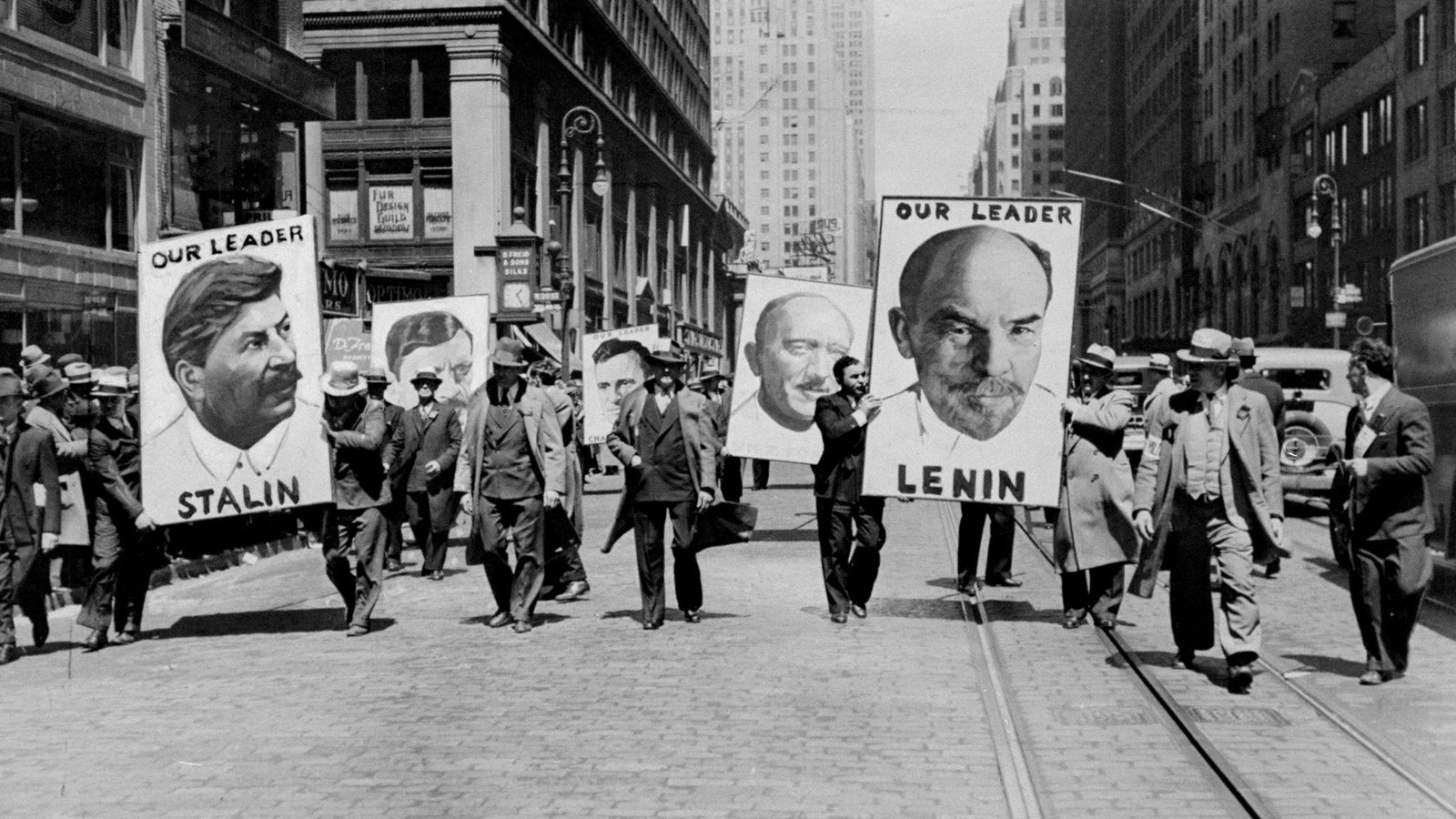
The wind of the October Revolution also swept across the United States. In 1919, the Communist Party of the United States of America was founded by the convergence of the workers’ movement and the Black liberation movement. Following the direction of the Soviet Union and the Communist International, the Communist Party will go on to lead struggles that mobilized millions for their economic and political demands in the 1920s and 1930s, organizing all sections of the working class from sharecroppers to miners and industrial workers.
108 years later, the October Revolution continues to hold relevance for the working class and people of the world. Today, to preserve their decaying order, imperialists, led by the United States, have intensified their warmongering and poured immense resources into militarization, as millions of people in the oppressed countries are rising up in rebellion. In the US itself, the imperialists unleash more brutal attacks against the working class to resolve the worsening crisis of overproduction, stripping them of democratic rights and livelihood. We must remember the rich lessons of the October Revolution and apply them, without falling into the marsh and dead-ends of reformism and opportunism.
The October Revolution especially taught us that the revolution is led by a Party of the working class guided by the class ideology. Only with such a Party, built and steeled in the furnace of class struggle, can the revolution be carried out until the end. The Bolsheviks were the best example of this: under Lenin, they took part in various big and small struggles, from the struggle for shorter workdays, to the struggle for democratic rights, all the way to armed struggle. In this process, they were able to propagate the revolutionary ideology among the workers and mobilizing them in the millions, unmasking and defeating all opportunists and revisionists who aim to deceive the working class. Like Chairman Mao once pointed out: “with the masses, with the Party, all kinds of miracles will be done.” Likewise, the October Revolution taught us about the centrality of Political Power, which must be conquered and defended with violence; Lenin famously said that the State machine cannot be simply changed, it must be smashed. The capitalists will not give up the struggle without a fight; it is up to the working class to put up this fight and to exercise its own dictatorship against the capitalists.
US Communist and working-class leader Big Bill Haywood, who lived in exile in Russia after 1921 described the inspiring process the October Revolution represented: “Here in Russia they’ve had nineteen battlefronts to fight on. They’ve had to recruit, discipline, and provide for a tremendous army. They have had a lot of unscrupulous nations — most of them as bad as the United States — to deal with. An upheaval means change in the life of the people; adjustments must be made, certain commodities exchanged abroad — and that requires the dictatorship of the proletariat. But every communist in every country must be educated to see the end, the final revolution, and to know that the political state is going to exhaust itself and find no further function. The thing that takes its place is industrial — industry including art and science and agriculture, all human activity summed up in economic life, and in all those fields Russia is coming out in the forefront of the world. Here the revolution is an accomplished fact, and other nations must follow. I’ve learned that here.”
Today, to take up the red flag of the October Revolution means to take up the road that it has shown us, to organize the working class everywhere and anywhere for socialist revolution.