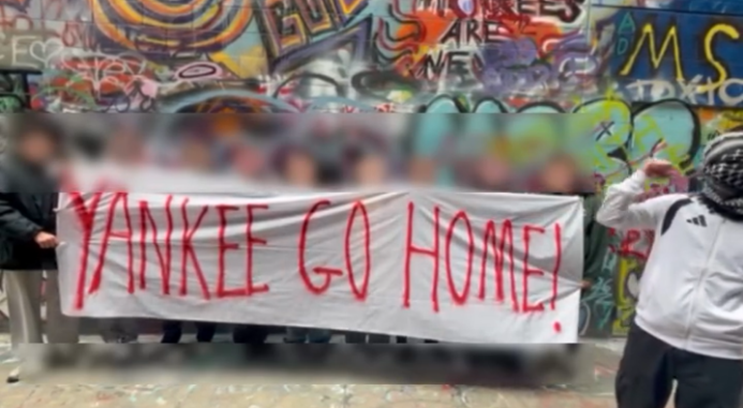
In today’s mainstream discourse, the US-Mexico border is one of the sources of the country’s problems. Any discussion related to it is often shrouded in symbolic cues of racism and xenophonia. Migrant encounters at the border, under the threat of death and torture, are at their lowest level in more than 50 years. Meanwhile, about 470,000 guest workers, mostly agricultural workers from Mexico, continue to cross the border every year with legal permission: they are oppressed through a complex system of trickery and abuse by the US employers and their middlemen, illegally overworked and underpaid, sometimes stripped of basic freedom of movement or even sexually abused. While the attack on immigrants intensified with fascistization, the semi-feudal and semi-colonial reality of Latin American countries continues to force workers and peasants to leave for the US and serve as cheap labor for the imperialists. In short, the existence of the border is the best illustration of the US colonial domination of Latin America.
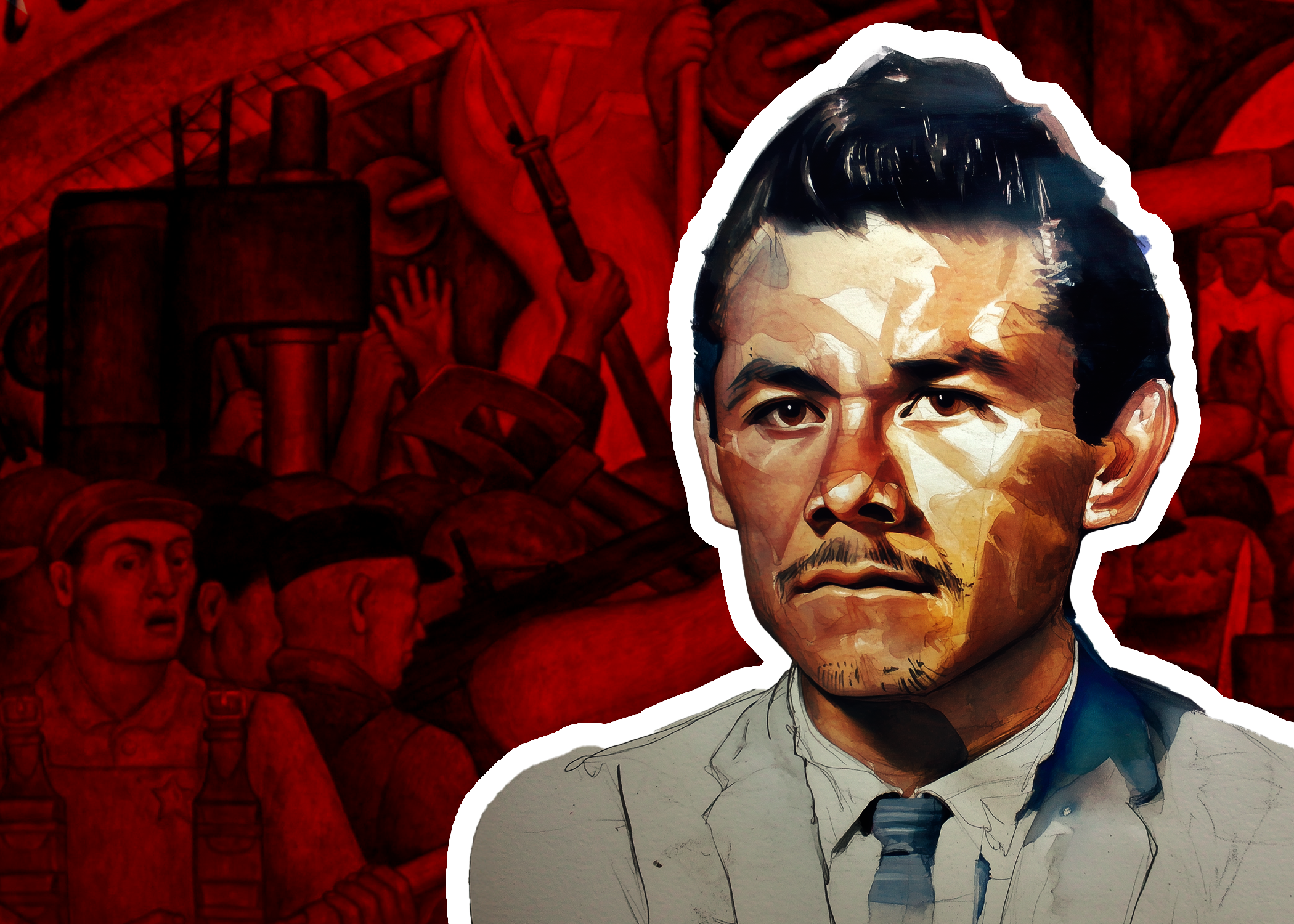
However, 50 years ago, a small group of people once organized migrant workers across the border in direct defiance of US imperialism and its lackeys, building up support for a nascent armed struggle. They were known as the United Proletarian Party of America (PPUA) and their leader was an obscure figure by the name of Florencio Medrano Mederos.
Early Years
Florencio Medrano Mederos, nicknamed “El Güero” (“the blonde man” in Spanish), was born in a poor peasant family on October 27, 1945, in Cutzamala del Pinzón, Guerrero, a state in southern Mexico. He started working at an early age like many poor peasants, directly experiencing the harsh oppression and exploitation in the Mexican countryside. Because of this, Medrano became active in the peasant movement and quickly distinguished himself as a natural leader, charismatic and resolute. In 1967, when living and working in a nearby state, Medrano was first introduced to Marxism. Two years later, he became a founding member of the Revolutionary Party of the Mexican Proletariat (PRPM), a Party guided by Marxism-Leninism-Mao Zedong Thought.
As a result of the Sino-Soviet split, the Great Proletarian Cultural Revolution, and the revisionist degeneration of the Mexican Communist Party (PCM), anti-revisionists in Mexico aligned themselves with the Communist Party of China (CPC) and demarcated with the reformist practice of the PCM. The PRPM was born under these circumstances. In its first Congress, the PRPM resolved to launch the New Democratic Revolution through Protracted People’s War. The PRPM quickly became recognized by the International Communist Movement led by the CPC. In May 1969, the PRPM travel to the People’s Republic of China. The nine members of the group, including Medrano, received six months of political-military training in China.
However, upon their return to Mexico, several key members and leaders of the PRPM were arrested by the Federal Security Directorate for a bombing connected to an urban guerrilla organization. This terrible blow destroyed the young group. There were no serious attempts at restructuring the organization from both its leadership and membership. Florencio Medrano, however, was the only one who continued the revolutionary struggle.
Rubén Jaramillo Colony
Florencio Medrano, living “on the run”, managed to evade police persecution in different parts of southern Mexico, taking refuge among peasants. Working odd jobs and in poverty, he continued to propagate the works and ideas of Chairman Mao Zedong among his coworkers. Pedro Medrano Mederos, his brother, fondly remembered him like this:
They invited him to go study, to prepare himself in China… when he returned to Mexico, the Mexican government began to follow him, Mexican law began to persecute him, and so he went from place to place, working with bricklayers or wherever he could find work. Then he went to Acatlipa, where he took refuge with the communal dwellers (ejidatarios), cutting roses, and from there, he was like the evangelists with their books under their arms, preaching the doctrine of Mao Zedong to the communal land workers, who will gather there to cut roses and all that. Then, as time passed, the moment arrived for Rubén Jaramillo…
Adhering to the Mass Line and the line of Protracted People’s War, Medrano sought to create and consolidate a presence among the masses to build a political base that would eventually swell the ranks of a people’s army. Medrano integrated his experience in China with the concrete conditions of Mexican reality, connecting the daily struggle faced by workers and peasants to the struggle against imperialism, semi-feudalism and bureaucrat capitalism. He forged a close relationship with the people and developed a clandestine core of Communists from their midst.
On March 21, 1973, Florencio Medrano led hundreds of peasants, migrants, day laborers, workers and unemployed people from Acatlipa and neighboring towns in seizing the large property of “Villa de las Flores”, owned by the son of the state governor, Felipe Rivera Crespo. Previously, this property was forcibly stolen from the communal dwellers by the corrupt governor to build a luxury resort.
Once the lots were partitioned to each family, a mass assembly decided to rename “Villa de las Flores” the Rubén Jaramillo Proletarian Colony, in honor of the peasant leader and forerunner of rural guerrilla warfare in Mexico. To improve the colony, “Red Sundays” were established in the style of communal work days in China and the Soviet Union: these were days of collective labor where residents paved roads and built sewage systems, schools, and public spaces.
Internal norms were implemented to foster companionship and respect, ranging from the prohibition of alcohol to severe punishment for violence against women and children. Medrano’s protection of women’s rights and encouragement of their participation and leadership earned him great respect from the masses. The work in the colony soon attracted university students, who assisted in labor and professional practices every Sunday. The colony even created its own newspaper, El Chingadazo, which featured political texts, agricultural instructions, and political cartoons.
The expropriation and intense political activity alerted the state government, who surrounded the colony with armed police. In an attempt to dismantle the colony, Governor Crespo offered 88 hectares in a neighboring town and jobs in local poultry farms; Medrano and the settlers declined. On May 12, 1973, the governor visited the colony undercover. He was swiftly recognized, detained by the masses, and forced to sign a document promising basic services – a promise he never kept.
On the night of September 28, 1973, the Mexican Army stormed the Rubén Jaramillo Colony. Under the pretext of searching for weapons of the Party of the Poor, a revolutionary organization waging armed struggle, they looted and destroyed homes of the masses. The attack signaled the beginning of a new wave of repression in the region, including the mass arrest and destruction of multiple class-conscious and democratic organizations in the region.
People’s War and the Southern Border
Again forced into clandestinity and relocating throughout Mexico, Florencio Medrano patiently summed-up the successes and failures of the previous period and continued the struggle. On September 23, 1974, he led a preparatory meeting to found the United Proletarian Party of America in Puebla (or Mexico City) with a small but dedicated group of 40 Communists. On January 10, 1975, the PPUA was formally founded. The Congress elected Medrano as the Chairman and established various organs of the Party, including a Central Committee and a Military Commission. Subsequently, the United People’s Liberation Army of America (EPLUA) was established under the leadership of the PPUA.
Since its founding, the PPUA maintained the seizure of political Power through armed struggle as its central and immediate task. In a statement entitled “Who We Are”, the PPUA explained: “As part of the poor of Mexico and the world, we have not taken up arms because of a love for war, but we have seen that it is the only way the rich will leave us in peace.” It formed a national structure and was not limited to solely being active in the southern states.
The PPUA was unique in two ways: firstly, it was the only organization that attempted to develop a People’s War through the line of encircling the cities from the countryside; secondly, it places a great emphasis on proletarian internationalism and the need for unity of the Americas in defeating US imperialism, while acknowledging that the struggle in each country must be decided according to their own conditions. In the words of PPUA, “if they [imperialists] are united to exploit us, we must also realize only by uniting and coordinating our struggle with the struggle of all the peoples of America and the world, we will be able to defeat our powerful enemies.”
The General Program of the PPUA established the following main tasks:
- Clandestinely organize and develop our Party in order to expand it throughout the country.
- Clandestinely organize and develop our Army of the Poor which, due to the immense revolutionary force of the peasantry and the weakness of the enemy in the countryside, will continue the strategy of struggling from the countryside to the city and to advance in waves to different directions until the cities, interlacing the rural struggle with the urban struggle.
- We must strengthen ourselves to build and consolidate mass organizations that gather around the majority of the population. In the case of the armed intervention of imperialism, the Anti-imperialist Democratic National Broad Front shall be formed, which unites all social classes, always under the leadership of the Proletarian Party for the defense of the Fatherland.
Under the leadership of Medrano, the PPUA established links with migrant workers and revolutionaries in the United States to internationalize the struggle. Mario Cantu, a Chicano restaurant owner formerly jailed for harboring undocumented immigrant workers, played an important role in this process. Cantu’s group of supporters, majority of which are Chicano and included Vietnam veterans based in San Antonio, provided financial support to the PPUA and smuggled weapons to the Oaxaca highlands. Likewise, Members of the La Raza Unida Party such as Ramon Chacon were tortured by the CIA and imprisoned in Mexico for their revolutionary activities linked to the PPUA.
Between 1974 and 1978, the PPUA carried out expropriations and numerous military actions against the Old State. Most notably, a detachment of the EPLUA kidnapped Sarah Martinez de Davis, the wife of an American capitalist in Mexico in exchange of a hefty amount of cash ransom. In October, 1978, Medrano was seen leading the more than 600 peasants armed with guns and machetes in invading 1,800 hectares of land in Oaxaca owned by the big landlords.
The PPUA carried out its mass work through armed actions and armed propaganda. Publications of the Party, such as El Comunero and La Lucha del Pueblo, were distributed by the EPLUA fighters. Everywhere they went, the EPLUA fighters agitated the workers and peasants by insisting the key link of class struggle, transforming poverty into revolutionary anger. Speaking on the reason for joining the EPLUA, a veteran remarked in an interview with the Mexican magazine Pie de Página: “[I was] about 20 years old, but we already knew about the class struggle. We grew up in the village with sandals, without clothes – we were just kids.”
Exemplary Communist
In early 1979, while planning a land invasion in Oaxaca, Florencio Medrano was martyred in an army ambush. He was only 34 years old. Like Lucio Cabañas, leader of the Party of the Poor, he was betrayed by an informant posing as a revolutionary. Although the PPUA-EPLUA attempted to reorganize, many members were eventually captured, tortured, and killed.
Some sources have speculated that remaining members later joined the Revolutionary Workers’ Party-Union of the People-Party of the Poor (PROCUP-PDLP) – an effort to reorganize the old Party of the Poor after the death of Lucio Cabañas at the hands of the Old State. The PROCUP-PDLP would be reorganized into the Revolutionary People’s Democratic Party in 1996, which would continue in the path of armed struggle in Mexico until this day.
The life of Florencio Medrano Mederos was full of hardship and failures. Despite this, he has never lost faith in the working class, its all-powerful ideology, and the revolution for a second, always fighting and resisting in the shining trenches of class struggle. In the Declaration of Principles of the PPUA drafted by Medrano in 1976, he declared with both precision and revolutionary optimism: “the future is bright and the struggle we have taken up is difficult. As members of the PPUA, we swear to consecrate our whole lives to the cause of the proletarian revolution of Mexico and America, we must be determined, without fear for defeats nor sacrifices, and strengthen ourselves to overcome all difficulties in order to conquer victory.”
Florencio Medrano dedicated his entire life in service of the people and the World Proletarian Revolution as an exemplary Communist and a model for all revolutionaries to emulate. At the same time, he was an outstanding proletarian internationalist who always adhered to the slogan of “workers of all countries, unite!” His story was the story of revolutionary unity between the working class and oppressed people in Mexico and the US. As revolutionaries-in-formation in the United States, it is our job to take up his work and follow in his footsteps, to defeat the developing tendency towards fascism and the renewed offensive against the Latin American people and immigrant masses with resolute and militant struggle. At the same time, waging socialist revolution here will be our highest and best contribution to the oppressed people of Latin America.
It is appropriate to conclude this article with these words written on the last page of a copy of the PPUA Program, confiscated by the Old Mexican State:
“For the destruction of the borders and the reunification of the free people of America in their struggle for socialism. The rich use violence to exploit the people, the people will use violence to liberate the people!”