[Editorial Note: We are republishing an article from the April 2026 issue of Strike the Stage, Official newsletter of the Live Event Workers’ Committee. The article also includes a call to action for May Day, day of the international working class.]
Word travels quickly, and no doubt many workers in the Pittsburgh live event industry have already heard about the mass resignations at Flyspace. Several skilled workers at the head of different departments decided to quit all at once. A few already left, and a few more are threatening to quit within the month, which would almost totally drain the company of skilled production workers. Several managers (including upper managers, like the director of production) have also quit.
A couple months before this, Flyspace upper management fired a few key skilled workers and lower managers. Considering that management was interviewing candidates for similar positions when these firings happened, this is more likely about capitalizing on the seasonal nature of live events than about money, by purging their most outspokenly discontent workers and replacing them with people who don’t know any better.
The reason for this is obvious to anyone who has worked for or alongside Flyspace Productions on an event. If it’s worth saying once, it’s worth saying a thousand times: years of stagnant wages, poor treatment of workers, unsafe working conditions, understaffing and terrible hours with no overtime can only be withstood for so long. The company’s owners and investors are struggling so severely to increase their profits that they can’t even hold onto their managers. After years or even just months of enduring these conditions, their employees finally decided to shove it back in their face.
Different logic of skilled vs. unskilled workers
Why is it that the skilled workers chose the tactic of making plans to simply quit, instead of uniting with the unskilled workers to organize a strike? We in the Live Event Workers’ Committee (LEWC) tried to agitate for the latter tactic, to unite instead of quit, but without much success. Some of this is because we’re new and still have to prove ourselves. But the different roles of skilled and unskilled workers pushes them to see things differently, too.
A skilled worker is someone in a responsible position which requires technical knowledge, and who generally oversees the work of unskilled workers who assist them. By “unskilled” we mean what we like to call “neck down” work: pushing boxes, using muscle more than brains. Obviously, an audio engineer could work a shift as a stagehand or a barback, for instance. Generally skilled workers at Flyspace also work full-time (whether or not they’re actually salaried). They have more individualized roles, and work with fewer people but more often. Because skilled workers direct unskilled workers on the job, they may not see the point in uniting with the unskilled and part-time workers, who are hired by the event and have less contact with management. And because of the disorganization and understaffing at Flyspace, skilled workers are forced to learn quickly and take on extra responsibility, which makes their role look good on a resume.
Unskilled workers lead the way
The unskilled, part-time workers, on the other hand, do the most social labor. It takes many people to load shows in and out, to move truss, heavy carts, move stage decks, set chairs, clean up a venue, etc. They’re also likely to have more contact with different areas of the live event industry, because they need to have multiple employers.
As laborers, the unskilled workers don’t get much credit for their work, and their job doesn’t look as good on a resume. They are kept out of decision-making and looked down on, and they get paid worse than the skilled workers because it takes less time to train an unskilled worker. But the work of large numbers of unskilled laborers is absolutely necessary for events to happen.
So, the logic of the unskilled workers is to organize: to unite together and improve conditions by withholding their labor (by going on strike, walking out, sitting down on the job until demands are met, slowing down their work). This doesn’t mean the skilled and unskilled workers can’t unite. We have a common enemy, and we know that skilled workers in our industry, at least in theory, support what we want to do, even if they’re not so sure they want to get involved yet. What it does mean is the unskilled workers are the most progressive force in our industry. They’re the most numerous and the quickest to support us.
Form an all-industry union
We have to put more effort into organizing and getting Strike the Stage to workers in other aspects of production: catering, food stands, bartenders, cleaners, ushers, ticketing, laborers. We can start doing this by talking to the other workers we see on the job. Some venues have extras lists for event labor, like hotels and museums. All Occasions, Allied Universal and Compass Group hire event labor, security and catering respectively. Aramark, A1 Resources, Legends Global, OVG, ABM Industries, and a few others hire labor at stadiums and arenas.
Our goal with the Live Event Workers Committee is to form an independent, industrial union: ALL live event workers in a single union. To get there, we organize committees of workers on social lines: areas where the same workers work together most often. These committees build their strength and support through struggles of confrontations between workers and management, starting small and building up. Finally, committees will organize elections with these workers to form a trade union. The election is about proving our coworkers support us, not necessarily getting legal recognition from the Department of Labor. The creation of a trade union is a leap forward, moving to open conflict between the union and different company owners. Once we have a few trade unions, they can unite into the Live Event Workers Industrial Union.
Organize through struggle
Some people on the left think we need to focus on reforming the state unions – those registered with and regulated by the US government, like IATSE. We think this is a lost cause, and that the only way to unite all workers is to devote ourselves to organizing the unskilled, unorganized workers. Past editions of Strike the Stage have exposed, in detail, IATSE’s historic role as a strikebreaking union, its role in organized crime, its support for US imperialism and fascism, and its focus on the needs of a few, white, skilled workers at the expense of others. That the vast majority of IATSE workers are white, while Black workers are much more numerous in unskilled live event labor at the same venues is no accident.
Independent organizing is possible! Another workers’ organization in the New Labor Organizing Committee (NLOC) that we’re a part of, New Day at Amazon, led a small campaign during the holiday rush before Christmas. They had to do mandatory 12-hour days back-to-back while management worked them faster and faster. New Day at Amazon united their coworkers around an achievable and iron-clad demand: either give us less mandatory overtime, or pay us more. Workers flooded management with complaints around this demand. Then a couple dozen workers walked out of a distribution center at the same time! The workers held a rally. Almost immediately, management met their demand: they got paid double OT for the rest of peak. Then other Amazon workers started joining New Day in large numbers.
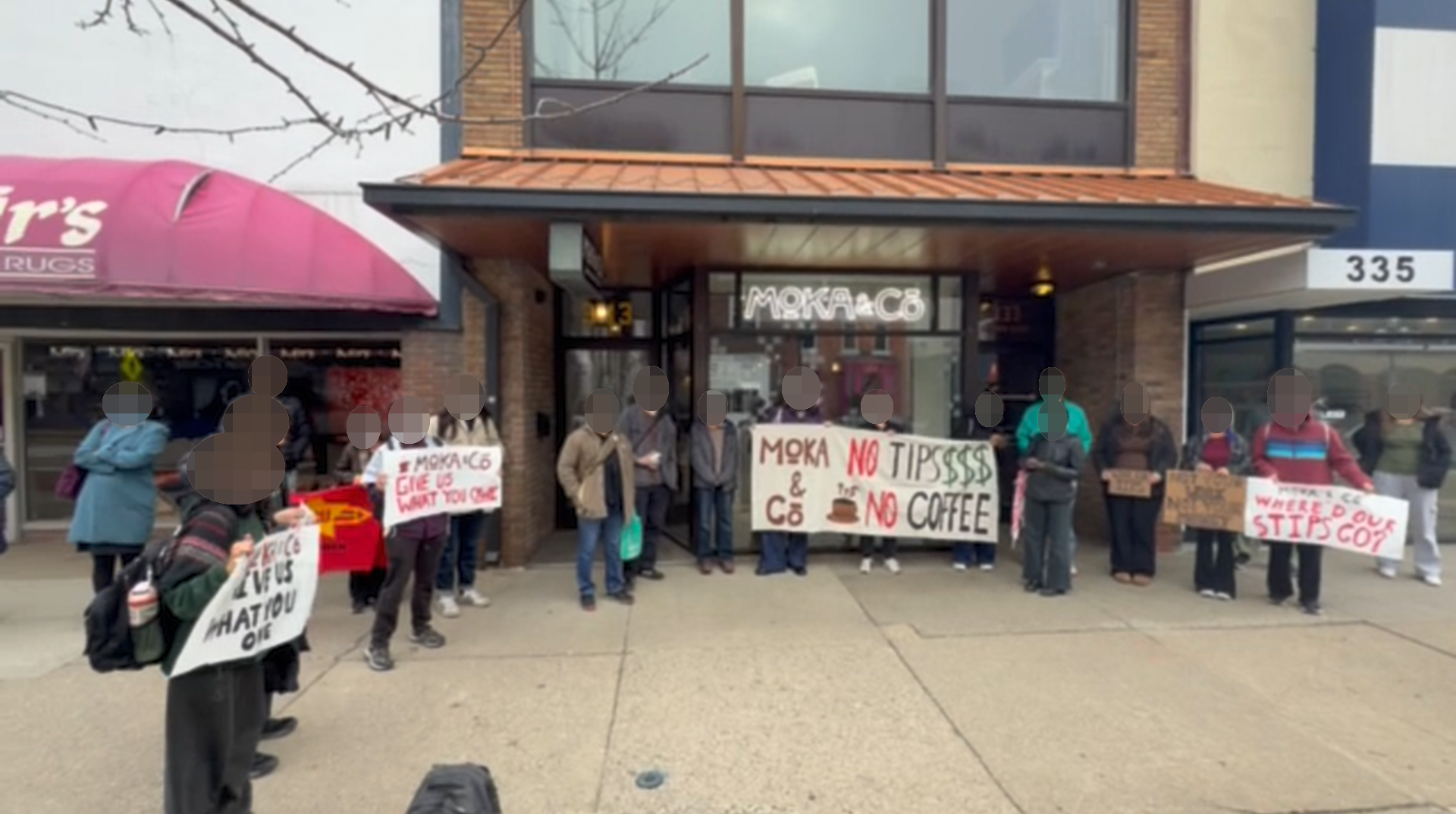
Workers at a cafe in Michigan whose tips were being stolen by the owner did something similar: in contact with an NLOC member, a member of the Revolutionary Student Union and their coworkers got together and figured out how much the owner owed them, then presented a demand letter saying you have one week to pay us our stolen wages and make sure this doesn’t happen again. The owner refused, so when the time was up, they refused to work. They organized a picket line outside the cafe, and again, almost immediately got all their demands met. (Read online for more details)
Call to action for live event workers
We can apply these tactics immediately. Because our work is temporary and day-based, we need a creative approach. We encourage all our readers and supporters to do the following:
First, decide with some workers you trust on some hard lines in the sand that we won’t let management cross when we’re at work: we need breaks and 15’s and have sufficient time for them. We need parking and meals paid for. We need to work the hours we agree to, and not for too long without overtime. We deserve respect: won’t tolerate racist, anti-gay or anti-trans comments, suggestive or degrading comments towards women, or unequal treatment. We need to have enough people working and enough time to do our work safely. We need motor controls to be called out before any truss, video walls, etc. get lifted or lowered around us. We will not accept being pressured to work too fast.
The second one of these lines gets crossed on the job, class-conscious workers need to rally as many of their coworkers on the job as they can and confront the on-site lead together. Prove that we are willing to stand up for ourselves and our coworkers! Practice taking collective action!
Celebrate and rally for May 1: International Workers’ Day
Our problems are not unique. No matter where you work – a warehouse, a restaurant, an assembly line, a coffee shop, a school campus – wages are getting worse, the pace of work is getting faster, and more and more people are out of work. Improvements in technology lead to unemployment and poverty instead of less work and more leisure for everyone.
It was common in the 1800s and early 1900s for workers to put in 12-16+ hour days in dangerous and inhumane conditions (not unlike today..). On May 1st, 1886, over 300,000 workers went on a general strike across the United States for an 8-hour work day. At Haymarket Square in Chicago, a bomb from an unknown source went off during a rally, and the US government used that as an excuse to round up and execute organizers who supported the 8-hour workday, including some who weren’t even at Haymarket that day!
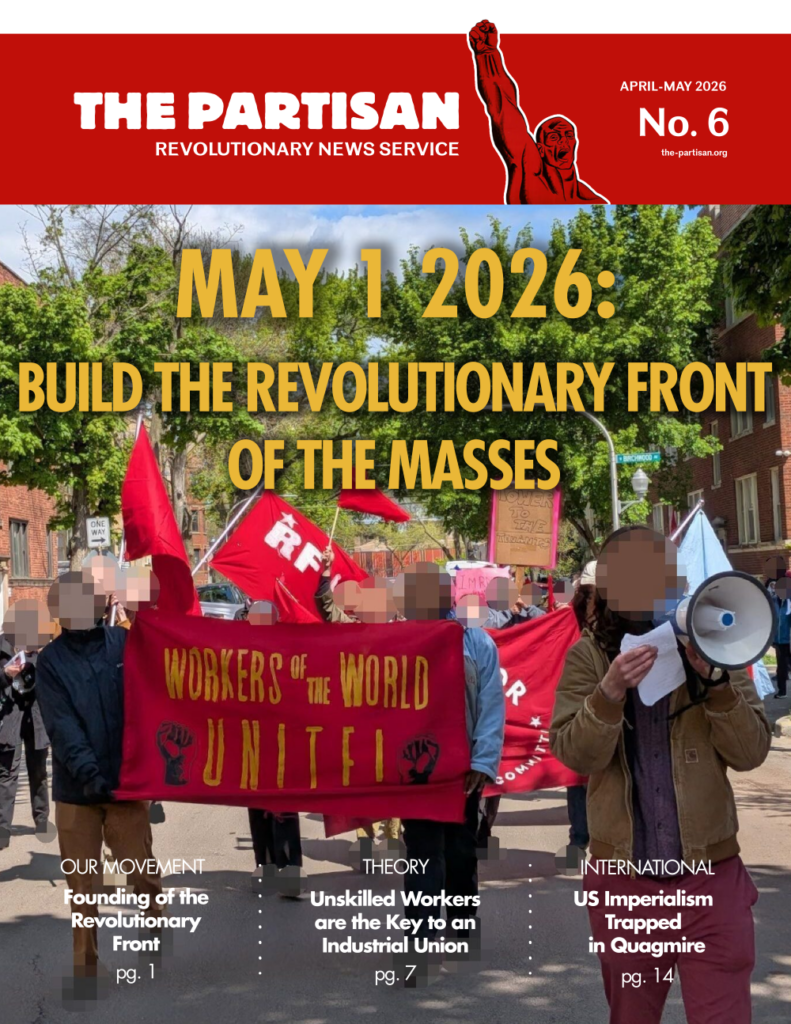
May 1 has since spread around the world as the day of the international working class. Communists, socialists, unions and workers in all countries remember the anarchist martyrs of Haymarket and the many millions of workers who fought and died in the class struggle. The NLOC has a campaign to celebrate and rally for May 1st. Talk to one of us to join in on our events for May Day in Pittsburgh!
Long live International Worker’s Day!
For a revolutionary workers’ movement!