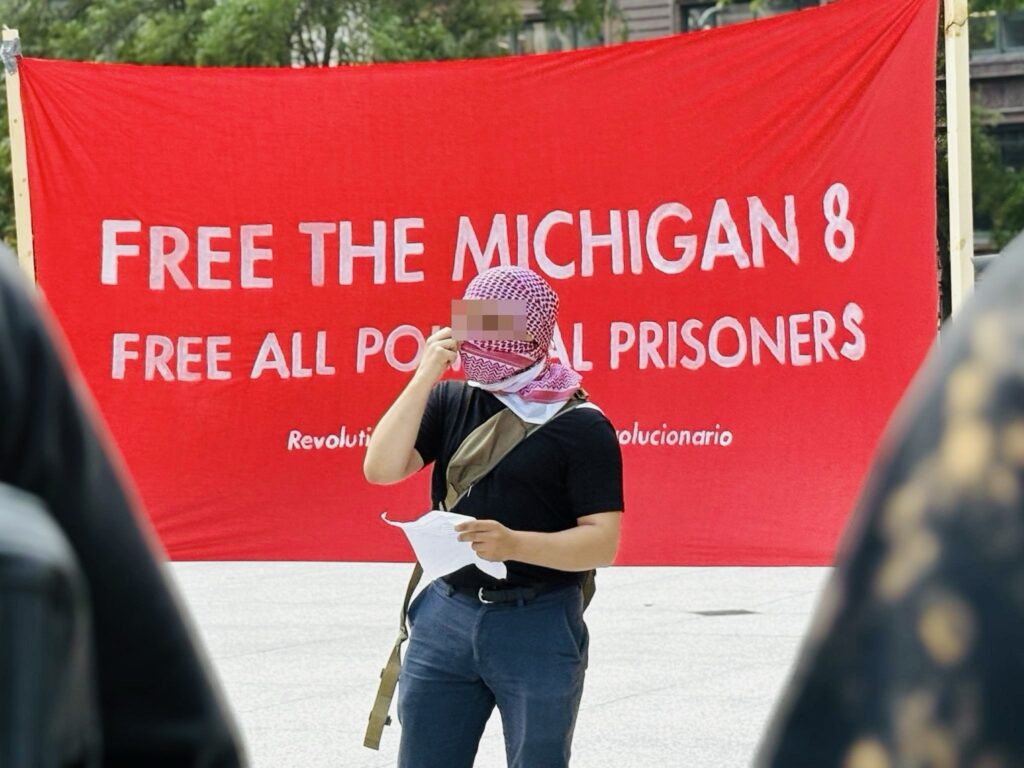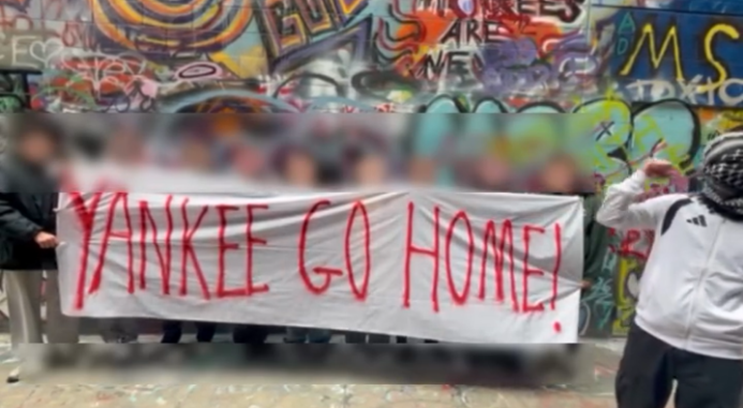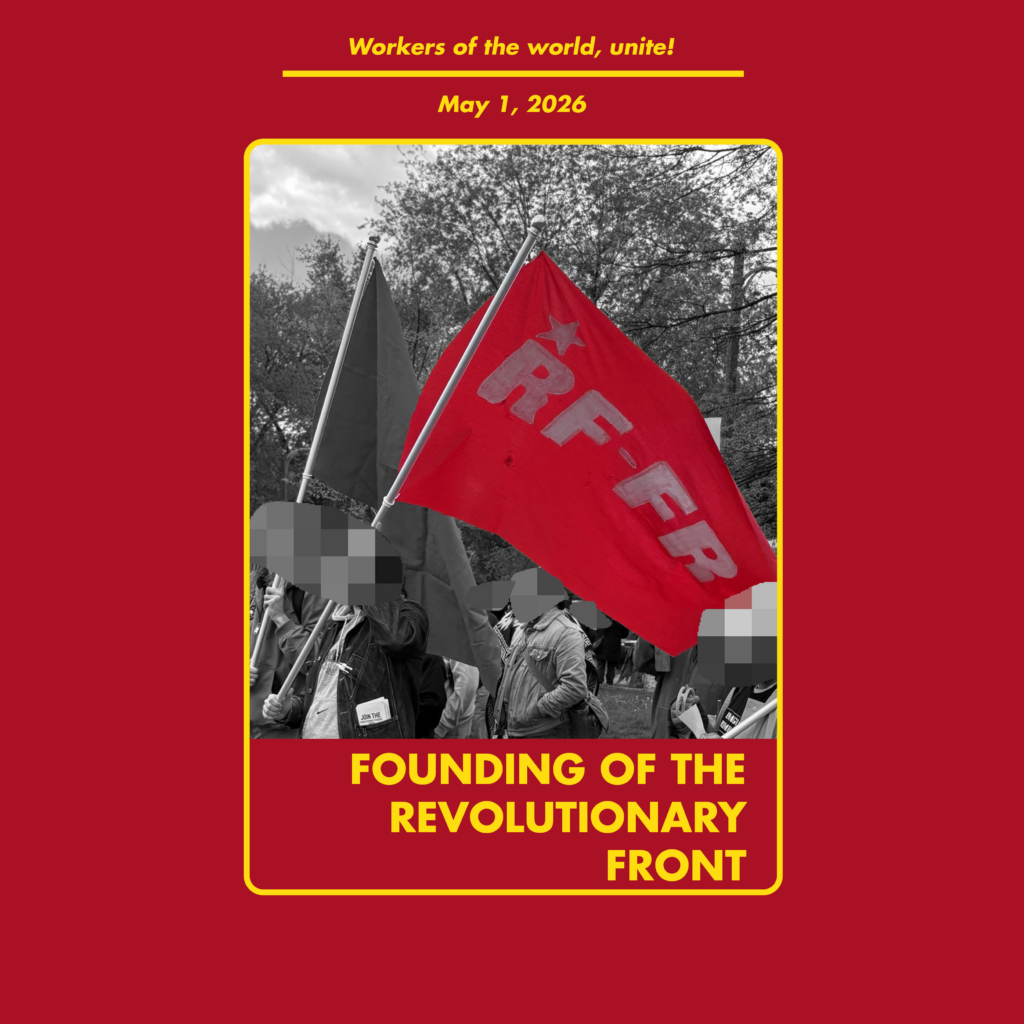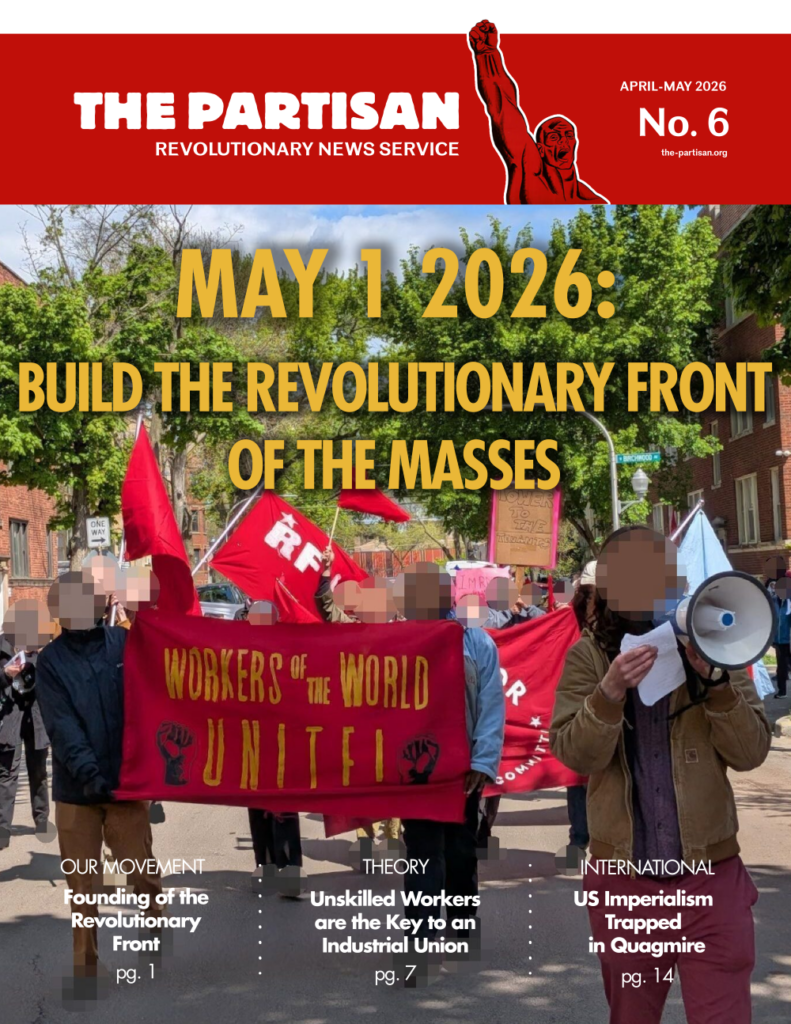
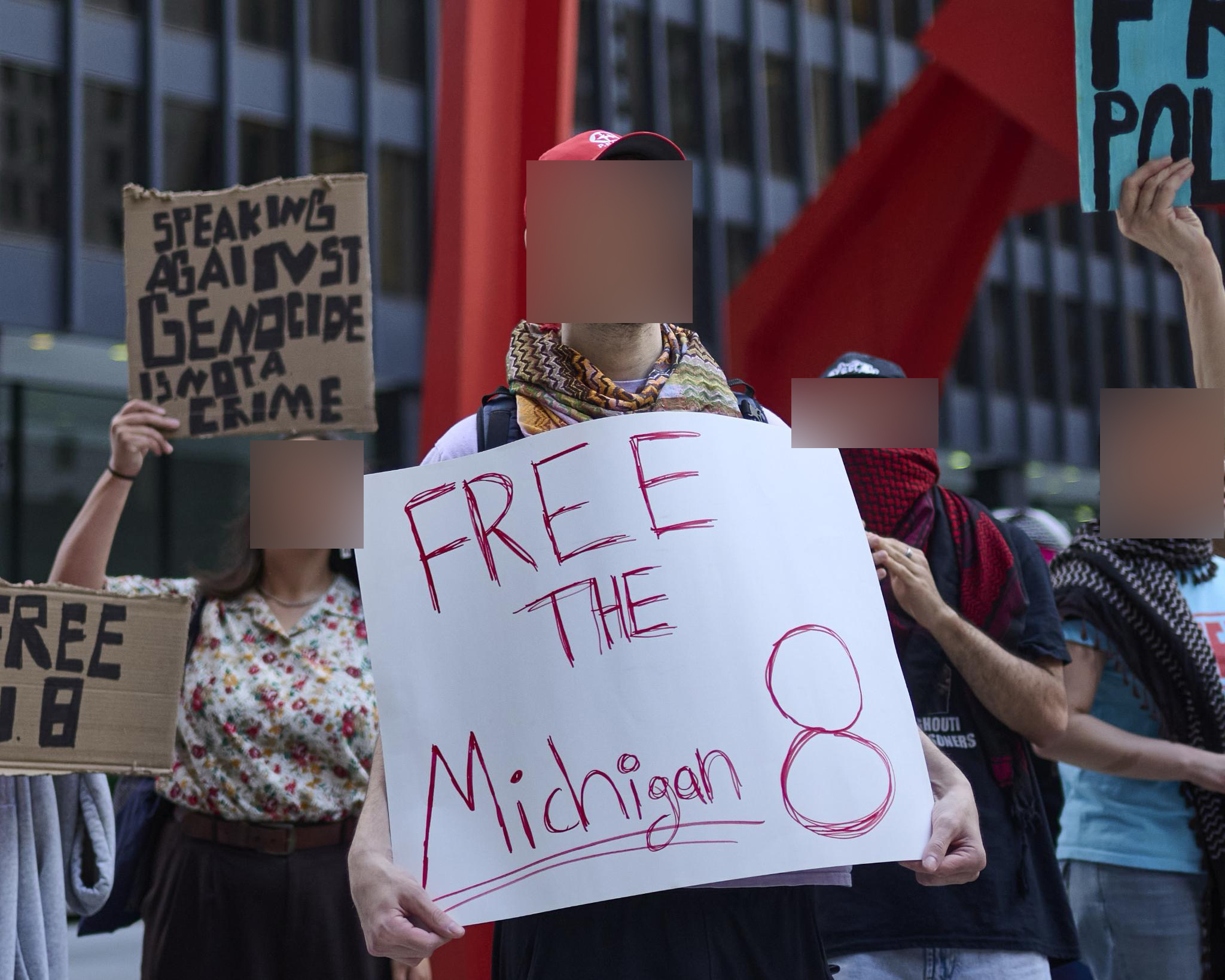
On June 12, revolutionary mass organizations affiliated with the Revolutionary Front-Frente Revolucionario (RF-FR) in Chicago, alongside allied groups including the Chicago chapter of Students for Justice in Palestine (SJP), the All-Chicago Tenants Union (ACTA), and the International Solidarity, Accountability, and Freedom Project (INSAF Project), mobilized an emergency rally on Friday in support of the Michigan 8.
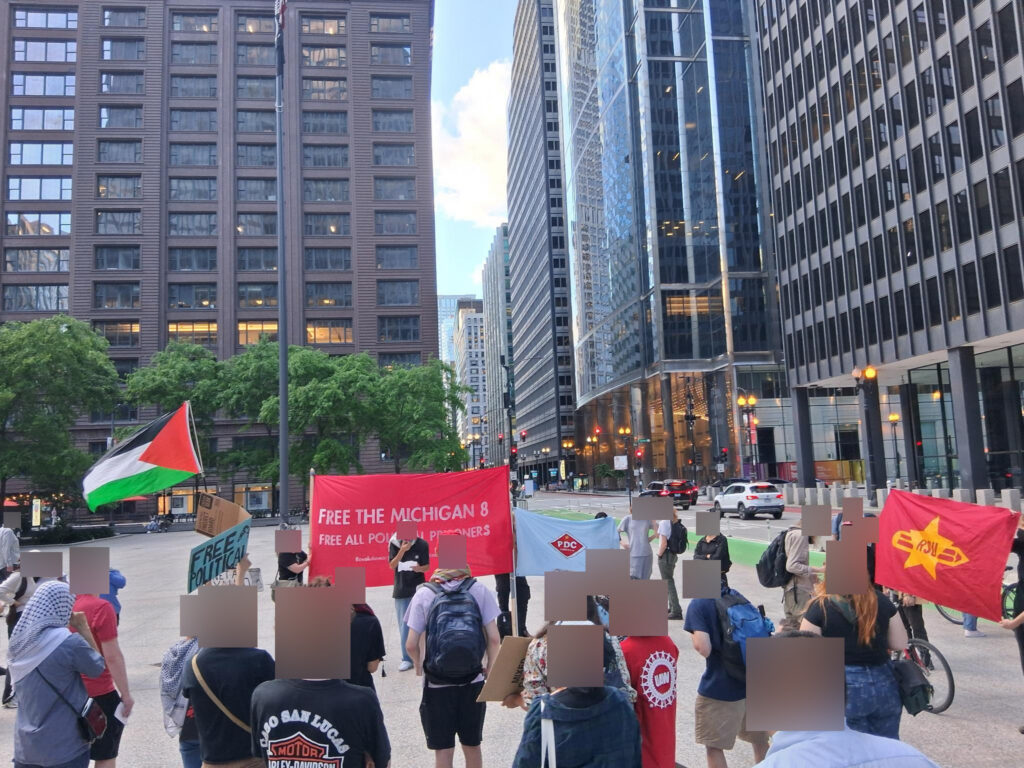
Nearly 70 people gathered at Chicago’s Federal Plaza, directly outside the offices of the US Attorney for the Northern District of Illinois and the Everett McKinley Dirksen US Courthouse. The demonstration came just two days after a Chicago activist connected to the Michigan 8 case appeared in federal court for an initial hearing.
Before the rally had even begun, participants observed a substantial presence from the Chicago Police Department (CPD). Organizers argued that law enforcement had closely monitored preparations for the action, drawing parallels to the surveillance methods described in the federal indictment against the Michigan 8.
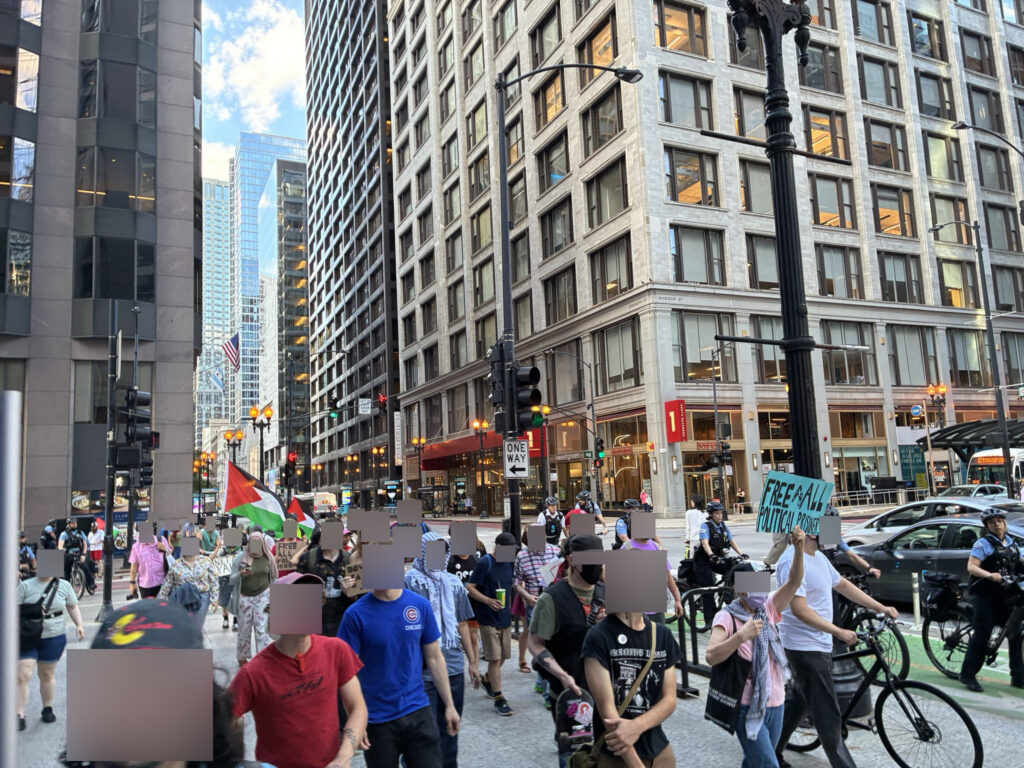
Following a series of opening speeches, demonstrators marched north through the Loop, confronting growing lines of police officers. Chants of “Free the Michigan 8!” and “ICE, FBI, IOF, we will not hide!” echoed across Federal Plaza and reverberated against the surrounding federal buildings.
As the march grew in confidence, protesters took to Monroe Street behind a banner reading, “Free the Michigan 8! Free All Political Prisoners!” The action briefly halted traffic on one of downtown Chicago’s busiest thoroughfares. After regrouping on the sidewalk, demonstrators later entered another major roadway heading south, continuing their march through the city center.
Police responded by escalating their efforts to contain the demonstration. Officers on bicycles repeatedly pushed into the crowd and pursued marchers while issuing warnings and threats of arrest. Despite these attempts at intimidation, participants maintained the march and continued their demonstrations without major disruption. No arrests were reported.
The action concluded where it had begun, in Federal Plaza. Student organizers and neighborhood activists delivered closing remarks that connected opposition to state repression in the United States with support for the national liberation struggle in occupied Palestine.
Organizers described the rally as part of a growing campaign to defend the Michigan 8 and resist what they characterize as the criminalization of political dissent and international solidarity activism.
The Michigan 8
The arrests of the Michigan 8 come amid a broader pattern of repression targeting the university’s pro-Palestine movement. In April 2025, the FBI conducted raids against activists connected to the struggle. Earlier, in November 2023, police arrested 40 student protesters during demonstrations on campus. Activists have also accused university administrators and law enforcement agencies of coordinating surveillance operations and forcibly dismantling protest encampments, mirroring actions taken at campuses across the United States.
One of the eight indicted activists was arrested in Chicago. According to the Department of Justice indictment, the FBI received assistance from the Chicago Police Department (CPD) in carrying out the operation. The CPD has faced criticism from activists and civil liberties advocates for its handling of pro-Palestine demonstrations in the city, where protesters have repeatedly accused the department of employing heavy-handed tactics against organizers and demonstrators.
Building the movement against fascistization
Solidarity actions such as those held in Chicago serve to develop the militancy of the masses, through the direct confrontation and challenging of the class enemy. They also serve as an opportunity to educate the masses about particular injustices, incorporating more and more people into the broadest movement against fascistization.
Towards this objective, the revolutionary movement must set up programs and structures that can sustain a protracted struggle against state repression, and to fight back on the working class’s own terms. Stable, unified organizations and coalitions, as well as a long-term view, are necessary to build the capacity to consistently fight and resist State repression. At the same time, it requires the genuine unity and participation of all revolutionaries-in-formation in this struggle.
The fight to drop the bogus charges levied against the Michigan 8 is only beginning. Meanwhile, all efforts should be made to contribute to the Legal Fund for Michigan Students for Palestine. Beyond this, continued mobilizations for court support are vital not only to raise the morale of the activists fighting repression, but also serve as rallying points for the revolutionary movement as a whole.