[Editorial Note: The Partisan is publishing an article by progressive newsletter New Day at USPS that we have received.]
On Contract Negotiations
Contract negotiations are dragging on across the Postal Service, leaving hundreds of thousands of postal workers in the National Association of Letter Carriers (NALC) and National Postal Mail Handlers Union (NPMHU) on the job under expired contracts. While each craft bargains separately, the same issues of delayed contract agreements, understaffing, safety issues, speed-ups, and a lack of transparency continue to affect workers throughout USPS.
City Carrier Contract Update
The National Association of Letter Carriers (NALC) contract with USPS has been expired since 5/22, and they are entering the fifth month of negotiations. Recent “updates” display a complete lack of transparency about the details being discussed; while carriers are left wondering about pay increases, health insurance benefits, uniform allowance, and benefits for non-career CCA’s (not to mention the seemingly non-existent fight for an all-career workforce). There are two other important topics that are being held over the heads of city carriers, with little or no details: the idea of a four-day (10 hours per day) work week and the use of AI to determine ever-changing routes (similar to how Amazon sets delivery routes). These aspects of negotiations, especially the fact that there are so many unanswered questions surrounding them, show a disdain for the rank-and-file on behalf of the union bureaucracy.
The shortened work week, while maintaining six-day delivery, could be a step in the direction of USPS’s desire to reduce the number of actual delivery days, which is a betrayal of the service aspect of the postal service that would negatively impact the public. And of course, adding distance and time to city routes would put even more physical stress onto carriers. As for the use of AI to determine routes, it should come as no surprise as USPS deepens its ties with AI companies—this “increases efficiency” by cutting hours and jobs, without the benefits going to the workers or the public.
Much more could be said about those and the other aspects of the contract, but one thing is clear: union leadership is in closed-door talks with USPS, and city carriers are left in the dark while working without a contract once more—all under a class-collaborationist no-strike policy. The members of NALC got a survey before the contract negotiations, making it appear as if the union was trying to be democratic (the least that could have been done). However, there is not much substance to the supposed democracy of a union when the rank-and-file workers lack control, and paid-off union bureaucrats collaborate with the very people they’re supposed to oppose and struggle against.
Mail Handler Contract Update
Earlier this month, the NPMHU leadership released the 15th contract update. The previous contract expired last October, and Mail Handlers are still without a contract, making it so that thousands of postal workers nationwide are going without the needed raises and cost-of-living adjustments they hope will be included in a new deal. The word hope here is key, though, since the negotiating team representing the mail handlers has only gestured towards a wage package with “fair and proper” compensation, while in previous updates referring to them as “reasonable”, but never disclosing the details. Mail Handlers are left hat in hand hoping that financial issues will be addressed, meanwhile no mention is made of reforms to address the deaths of multiple mail handlers in the past year or the underlying problems (understaffing and speed-ups) that have caused them. As a result of this negotiating impasse, union leadership will now look to third parties to resolve the differences between them and management. Whether through non-binding mediation or interest arbitration, the only examples of postal workers have of these processes playing out are ones where the workers are forced into sell-out contracts that fail to meet their needs.
Summation
Taken together, these contract negotiations point to a common reality across the Postal Service. The experiences of city carriers, mail handlers, clerks, rural carriers, and maintenance workers show that the problems facing USPS workers are not isolated to any one craft. Delayed contracts, understaffing, speed-ups, and back-door negotiations leave members in the dark, making it harder to hold either management or union leadership accountable. Across the postal unions, workers are confronted with many of the same struggles despite being divided into separate unions.
Since its founding last October, New Day at USPS has called for an end to craft unionism and the creation of one fighting union for all postal workers. The current system divides workers by craft while management bargains separately with each union. Postal workers, however, share common interests in fair wages, safe staffing, democratic unions, and defending a strong public Postal Service. Building solidarity across craft lines is essential if workers are to win lasting improvements for themselves and for the communities they serve.
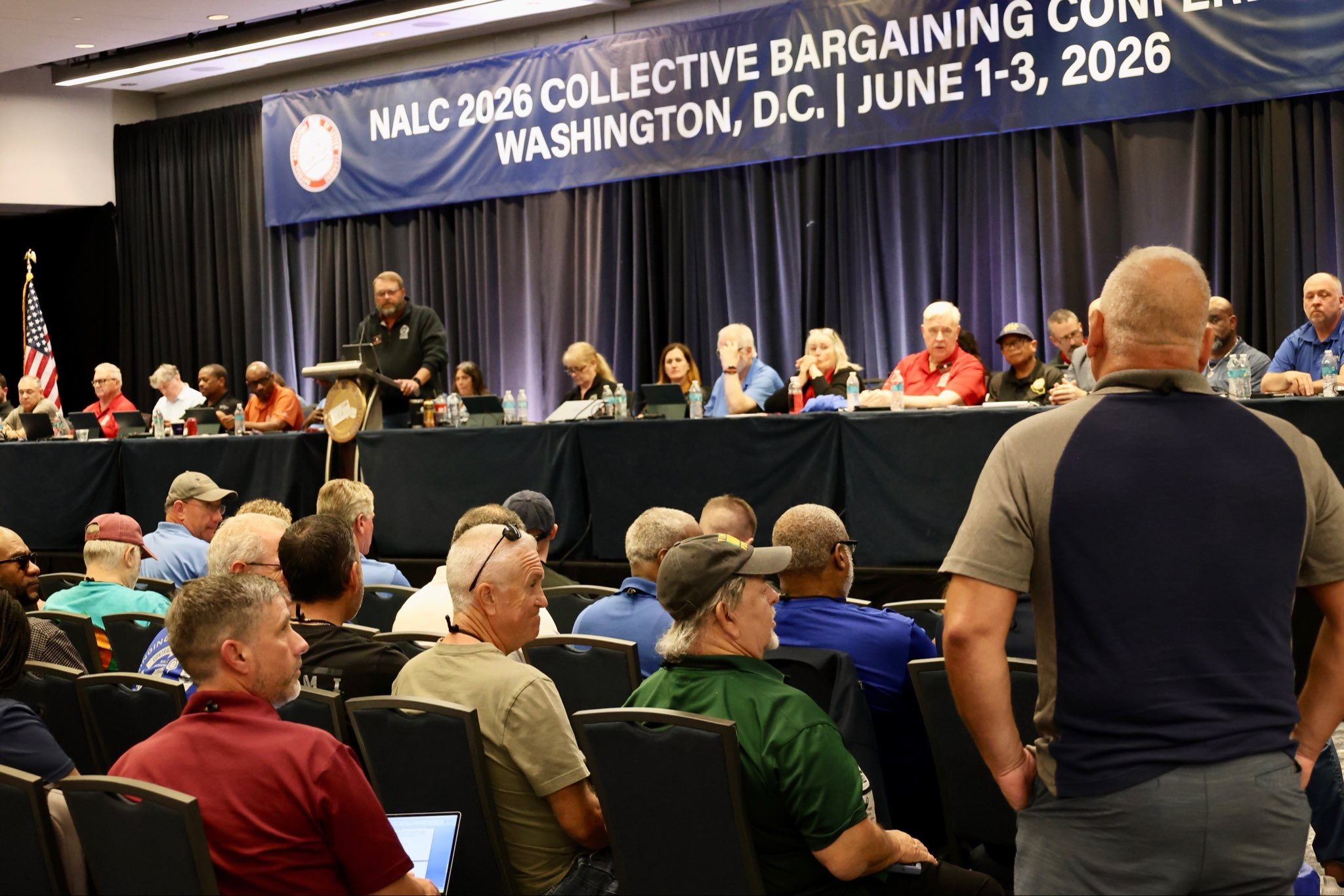
(Image: NALC 2026 Collective Bargaining Conference. Source: NALC.)