On June 10, Defense Secretary Pete Hegseth traveled to the US Navy base in Guantanamo, Cuba as the Trump administration has been increasing pressure on Cuba’s government and stepping up preparation for a regime change operation. Facing strategic defeat in its war on Iran, US imperialism has intensified its siege of Cuba and its people, desperately searching for a victory to offset its failures in the Middle East. The United States has pursued with Cuba for decades the strategy it later pursued with Venezuela and other nations: brutal economic siege mixed with military threats, counterpoised by promises of relief if capitulatory demands are met. This economic warfare has accelerated with the oil blockade, declared in January, leading to continued blackouts and a generalized failure of the electrical grid across Cuba in the last months.
The oil blockade has a few purposes for US imperialism. First, it is genocidal, and inflicts brutal and horrible damage on the civilian population, creating a crisis of hunger, health, and well-being throughout the island: for example, thousands of life-saving medical operations have had to be suspended, there has been a 148% increase in infant mortality, and birth rates have dropped to record lows. Second it has military implications, as the failure of the power-grid and other infrastructure weakens the Cuban military’s logistical capabilities and capacity to respond in the case of an invasion or strike. Thirdly it has political purposes, signaling a policy of “maximum pressure” to Cuban government officials, which in Trump’s mind translates to a greater likelihood of total capitulation of the Cuban State.
For decades following the Spanish-American war, Cuba was first an occupied colony and then a semi-colony of the United States, with American economic interests dominating the island. Historically this meant the tourism and agricultural sectors, but in the modern era the mining sector has taken on increased importance. According to the 2020-2021 US Geological Survey, Cuba contains one of the largest reserves of nickel and cobalt in the world. China, the main rival of US imperialism, currently holds a dominant share of global rare earth reserves, essential for producing EV batteries, semiconductors, AI systems, and military hardware. Securing greater access to these critical minerals would be greatly beneficial for the US.
Laying the foundation for an all-out war of aggression, Washington has continued to maintain a substantial military presence in the area since the invasion of Venezuela back in January. In May, the aircraft carrier USS Nimitz and its strike group entered the Caribbean, accompanied by guided-missile cruisers and destroyers capable of conducting precision strikes against land-based targets.
Already the blockade has pressured the Cuban government of Miguel Díaz-Canel, chairman of the Cuban party, into implementing so-called market reforms and liberalization measures. On June 12 he announced in a press conference that new steps were being taken to “incentivize foreign direct investment” from among “Cuban residents abroad”, and develop a “more dynamic foreign commerce” carried out by “state” and “non-state” enterprises. This of course is a concession to US imperialism, which demands greater control over and access to Cuban resources and the Cuban market. It remains to be seen whether Donald Trump and his cronies like Secretary of State Marco Rubio view this as enough to lift the blockade, or more likely continue to demand “regime change” instead.
On April 23, the kangaroo courts of US imperialism indicted former Cuban leader Raul Castro for the so-called murder of CIA agents more than 30 years ago. Despite this, the Cuban government has allowed the CIA director John Ratcliffe and FBI agents into its territory for bogus “investigations”, in the hope of easing tensions.
Unlike in Venezuela, US imperialism is openly posturing that it is not content with a Delcy Rodriguez-style arrangement in which the current political forces are “allowed” to stay in power in exchange for selling-out completely to US interests. Instead, US imperialism seems intent on more fully overturning the current government and installing puppets from among the Cuban “exiles” in Florida and elsewhere. However, as US imperialism grows ever weaker and more constrained, it is unclear if it will be able to carry out its maximalist demands on Cuba. Meanwhile, the opportunist “left” governments have remained silent on the impending aggression against Cuba, as they deepened economic and military ties to the US.
The Cuban Revolution
The Cuban revolution of 1959, the first successful armed revolution in the Western Hemisphere and in the “backyards” of US imperialism, inspired immense fervor across Latin America and the whole world over. A few years later, in 1961, the Cuban people heroically defeated US imperialism again at its Bay of Pigs Invasion, shattering the myth that the US is invincible. Since then, it has continued to serve as a top target of US imperialism, suffering from decades of blockades and attacks.
The Cuban revolution inspired millions of revolutionaries and democrats to take up arms across Latin America. In many countries, it inspired a break with revisionist parties that preached parliamentary cretinism.
Nonetheless, the Cuban Revolution did not fundamentally transform the country’s economic structure. After 1959, Fidel and his government embraced a pro-Soviet revisionist line, which the Communist Party of Peru noted as causing significant problems for the Latin American revolutionary movement. Cuba developed an import-dependent, export-oriented economy tied to the Soviet Union, with sugar as its foundation. Following the Soviet collapse in 1991, Cuba adopted a dual-track system combining planning and market mechanisms, while increasingly relying on tourism as a major source of foreign exchange.
Following the COVID-19 pandemic and global economic downturn, Cuba expanded market reforms to address its worsening economic crisis, which only made it more vulnerable to imperialist attacks. In 2021, the government legalized private enterprises employing up to 100 workers and eased economic controls, but the measures were followed by rising inflation and the contraction of non-tourism sectors.
The second Trump administration renewed the longstanding US attack against Cuba. Beginning in early 2026, Cuba became unable to obtain petroleum from external sources due to US sanctions, which further weakened the national economy. Although the Cuban State adopted measures to prioritize basic livelihoods, the country’s heavy dependence on tourism led to a sharp decline in foreign exchange earnings, reducing imports and deepening shortages across the economy. Taken together, these episodes led to the current worsening economic and social crisis in Cuba.
Tasks of the Mass Movement
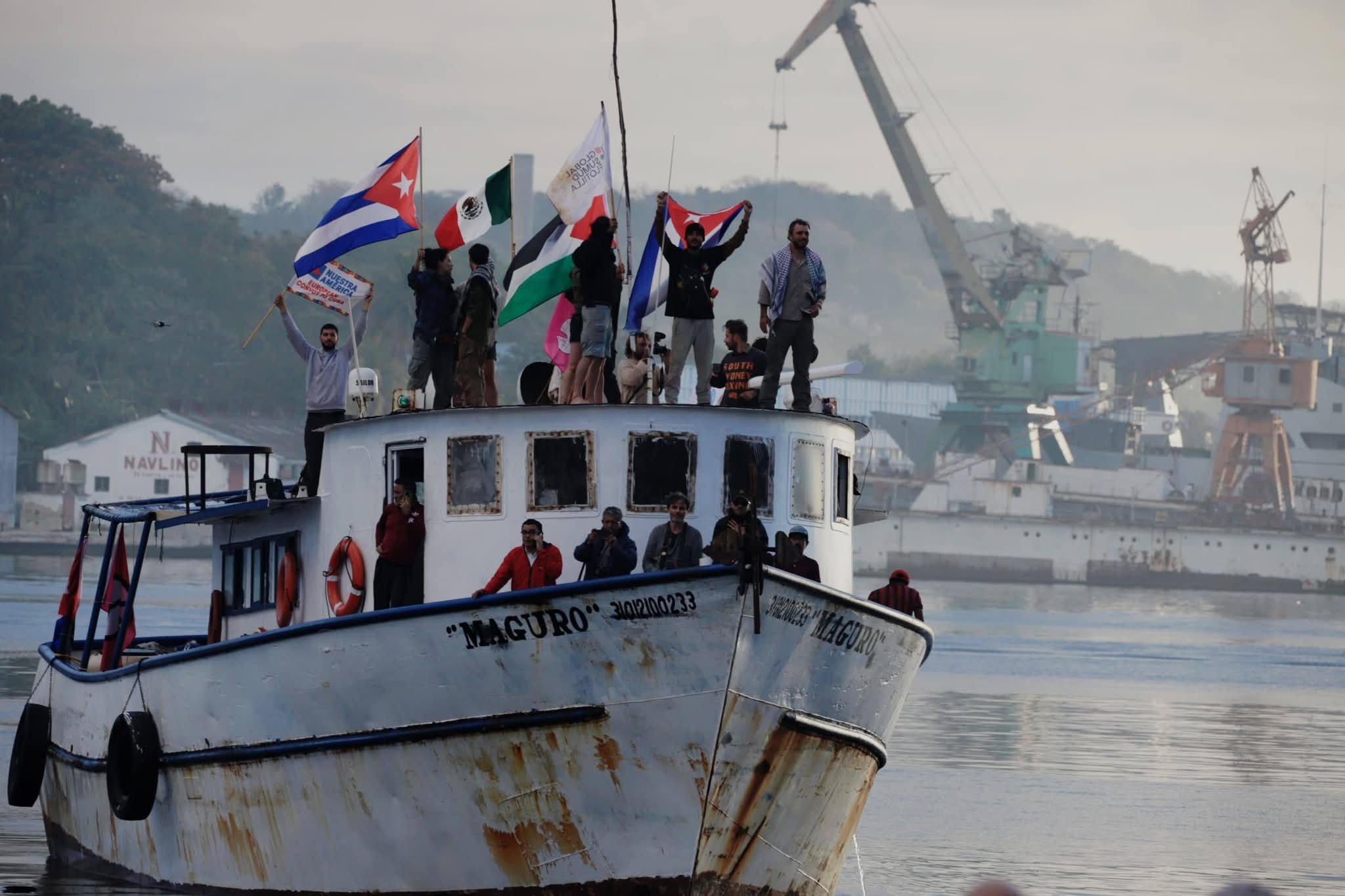
The imperialist blockade of Cuba is a bloody crime and demands condemnation and action. It is a genocidal measure aimed at increasing US imperialism’s control over Cuba and its people. Revolutionary and progressive forces in the United States should continue work organizing mutual aid and material solidarity efforts. Nevertheless, ultimately it is only through the overthrow of US imperialism, and indeed the whole imperialist system, that the Cuban people will be made truly free and able to exercise their right to national self-determination without interference and economic war.
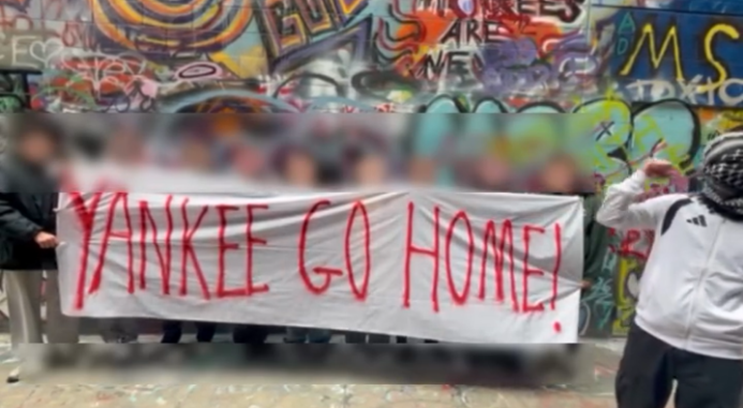
The US multinational working class has long remained marginalized from the Cuban solidarity movement, in large part because it has been dominated by opportunist and revisionist forces which the masses distrust and revile. By correctly combining our duty to struggle against opportunism with our responsibility as proletarian internationalists, we work to develop a new Cuban solidarity movement which is a solid component part of the broader anti-imperialist united front. We need to take class struggle as the key link, and mobilize the masses in militant demonstrations and actions in all possible areas and sectors. In this way we take solidarity work with Cuba out of the hands of vultures like the PSL and those like them, and back into the hands of the workers, where they belong. ¡FUERA YANQUI! ¡CUBA SÍ, YANQUI NO!