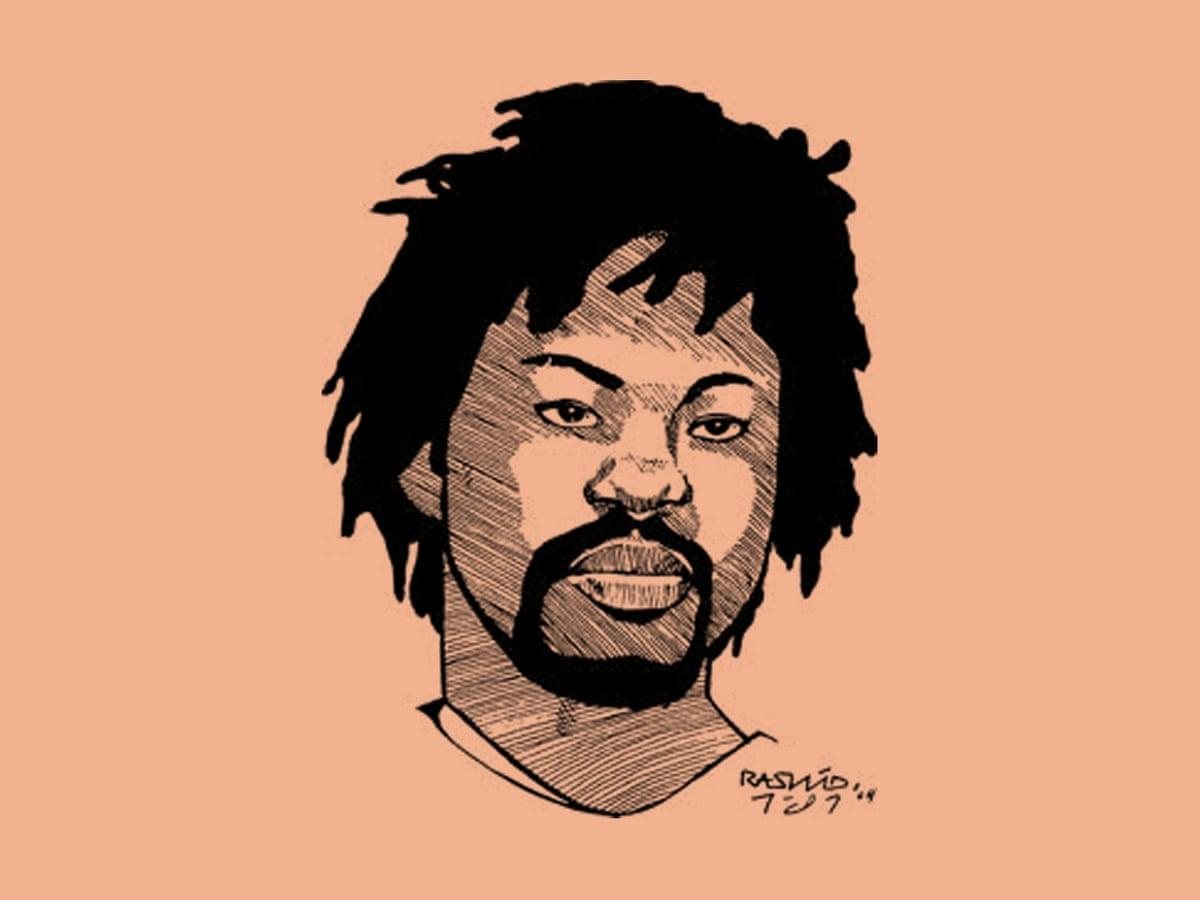
On June 16, Comrade Kevin “Rashid” Johnson, communist leader and long-time political prisoner, was released from retaliatory solitary confinement in South Carolina and returned to a detention facility in Virginia, due to popular pressure from supporters and progressives.
On May 13, 2026, the South Carolina Department of Corrections (SCDC) placed Cde. Johnson in solitary confinement for the trumped-up disciplinary infraction of “maintaining a social networking site.” This act came as the latest episode of a long series of attacks against Cde. Johnson by US imperialism. Cde. Johnson was constantly placed in solitary confinement, violently abused, and transferred between different detention facilities. On May 1, 2025, only a year ago, his leg was broken during his transportation to the South Carolina prison, likely as a result of violent torture at the hands of the reactionary police.
The SCDC’s basis for the disciplinary charge rests entirely on two text-based articles published online by progressive media which documented instances of mistreatment against Cde. Johnson while being held in South Carolina under an interstate compact agreement.
Following the infraction, SCDC officials handed down a sweeping set of punitive measures. Cde. Johnson was sentenced to 60 days in solitary confinement, 100 days of telephone restrictions, 100 days of electronic tablet and messaging restrictions, 100 days of canteen loss, and 100 days of visitation restrictions. The compound restrictions effectively sever Johnson’s primary lifelines to the outside world, including family, activists, and journalists.
Beyond the official disciplinary metrics, Cde. Johnson’s legal counsel has reported a series of highly irregular and potentially unlawful actions by facility staff. According to his attorney, prison guards recently entered Cde. Johnson’s cell during an active, protected legal phone call. While inside, staff members reportedly skimmed his legal correspondence and confiscated a number of legal documents without providing required paperwork, receipts, or prior notice. Furthermore, Cde. Johnson has faced targeted meal denials and the total deprivation of the legal property necessary to meet his ongoing court deadlines.
Following the heinous reactionary punishment, progressive organizations such as Uniting Prisoners’ Relatives, Organizing Against Repression (UPROAR) immediately mounted a campaign to demand the end of Cde. Johnson’s solitary confinement. As a result, Cde. Johnson was freed after 34 days in solitary confinement and returned to Virginia. The struggle continues as his property remained confiscated by the State and the trumped-up charges remain in place.
Attack on a Revolutionary Leader
The attacks against Kevin “Rashid” Johnson is an example of US imperialism’s favorite strategy: neutralizing the leadership of the revolutionary movement and isolating it from the masses. At the same time, the incident was a targeted assault on prison journalism and an effort to suppress reporting on institutional misconduct.
Cde. Johnson came from a lumpen-proletarian and New Afrikan background. In 1990, at the age of 19, he was falsely convicted of murder and sentenced to life in prison. While in prison, Cde. Johnson took up a leading role in the prisoner struggle, exposing the abhorrent conditions and oppression faced by working-class and oppressed nation prisoners, leading militant actions to fight and resist repression of the Old State.
As a revolutionary journalist, Cde. Johnson broke many stories regarding the oppression and resistance in the prison front. For example, in 2024, he reported that numerous men had set themselves on fire at the prison in desperate response to intolerable conditions in Virginia’s Super Onion State Prison, which was subsequently covered by mainstream capitalist news outlets. In 2018, while incarcerated in Texas, Cde. Johnson led a prison strike which spread to more than a dozen facilities across the state. He was severely tortured by State agents as a result.
Despite the difficult conditions, Cde. Johnson forged himself as a Marxist-Leninist-Maoist and a true servant of the people in the fire of class struggle. In 2005, he founded the Revolutionary Intercommunal Black Panther Party (RIBPP) and served as its Minister of Defense. Throughout the years, Cde. Johnson penned numerous theoretical articles which greatly contributed to the struggle for socialist revolution and New Afrikan national liberation in the United States.
The struggle to defend Cde. Johnson is far from over. According to UPROAR, “As usual, the fight is still on: Rashid has multiple lawsuits against the Virginian Department of Correction (VADOC) and SCDC with upcoming deadlines, and he urgently needs us to call and email VADOC officials until he gets: 1. All of his legal mail, 2. All of his property, 3. Immediate access to a tablet for communication.”
Call and email scripts for Cde. Johnson can be accessed here. We urge all our readers to take up this task and demand the Old State officials to comply with his demands.
Importance of the Prison Front Struggle
For a long time, various stripes of petit-bourgeois revisionist and opportunist organizations (sometimes even falsely masquerading as “Maoists”) have ignored the struggle in the prison front, or merely paying lip service towards it. As Cde. Johnson pointed out with great precision, “While most had good intentions they were at best advocates; people who had a very limited commitment to the interests of the oppressed and the struggle or otherwise placed their personal interests before those of the oppressed and the struggle.” As the mainstream “left” often ignores this struggle, the support for prisoners (and political prisoners in particular) is sustained by networks of smaller, local and regional collectives, sometimes former and current prisoners themselves.
Today, dozens of political prisoners and prisoners of war remain in the prisons of US imperialism. Many of them are aging veterans of the New Afrikan armed struggle of the 1960s to 1980s. On November 23, 2025, Jalil al-Amin, a revolutionary New Afrikan nationalist leader, passed away in prison. More recently, in March of last year, the Prairieland defendants, a group of activists from Texas, were unjustly convicted of trumped-up charges.
Beyond this, the prisons are vital sites of national oppression. Today, 37% of the total incarcerated population in the US are New Afrikan, often from racist and false convictions. An estimated 73,000 immigrants are detained in ICE facilities on a single day, according to a report by the Vera Institute. Forced labor, torture, and inhuman conditions are common themes in prisons and detention centers.
“Where there is oppression, there is resistance.” The prisons of US imperialism have a shining history of struggle. Historically, it has produced outstanding revolutionary fighters such as George Jackson and James “Yaki” Sayles. In 2016, the Free Alabama Movement organized a strike that involved an estimated 24,000 prisoners in 24 states, the largest in US history. In early June, detained immigrants in Delaney Hall Detention Center in Newark, NJ rose up in a work and hunger strike in protest of inhuman treatment. It is the duty for revolutionaries-in-formation in the United States to build a permanent and unbreakable movement in support of the political prisoners, one of the most directly repressed trenches of combat, and to link up their struggles with the militant struggle of the working class.